Understanding the 2027 COLA Increase and What It Means for Seniors
Key Takeaways:
- The Social Security Administration announced that the Cost-of-Living Adjustment (COLA) for 2027 is set at 3.6% View the official announcement here.
- COLA is calculated annually by the Social Security Administration (SSA) based on inflation measures to help monthly benefits keep pace with rising consumer prices.
- The new adjustment goes into effect in January (with Supplemental Security Income increases beginning December 31).
Managing a household budget on a fixed income requires careful planning, especially when the cost of living shifts from year to year. Understanding how annual adjustments work helps older adults and their families make informed choices, manage household expenses with confidence, and find available programs that ease financial pressure.
What is COLA and What Does It Mean for Your Social Security Check?
The annual Cost-of-Living Adjustment, commonly known as COLA, is designed to protect the purchasing power of older adults and individuals with disabilities. When inflation causes the price of everyday goods and services to rise, fixed incomes can quickly lose buying power. COLA acts as a bridge, adjusting monthly benefits upward so that beneficiaries can maintain their standard of living. Learn more about how COLA works here.
For the millions of Americans who rely on Social Security, this adjustment translates directly into tangible monthly support. Starting in January, the 3.6% increase will raise the average retired worker’s monthly Social Security benefit by roughly $75, bringing the average check to approximately $2,170 a month.
When and how you will see your new benefit amount
Knowing exactly when your new amount arrives helps with monthly budgeting:
- Supplemental Security Income (SSI): Increased payments for SSI beneficiaries begin on December 31, 2026 (since January 1 is a federal holiday).
- Social Security Retirement Benefits: Updated checks arrive on your standard payment schedule throughout January 2027.
- Official COLA Notices: The Social Security Administration will mail official notices outlining your exact new payment amount throughout December. If you want to see your new number earlier, you can log in to your personal Social Security account in late November to view your COLA statement online.
Historical COLA adjustments at a glance
Looking at historical trends helps put these adjustments into perspective. Over the past decade, COLA percentages have fluctuated significantly depending on broader economic conditions, ranging from modest adjustments in years with low inflation to much larger bumps during periods of sharp economic shifts.
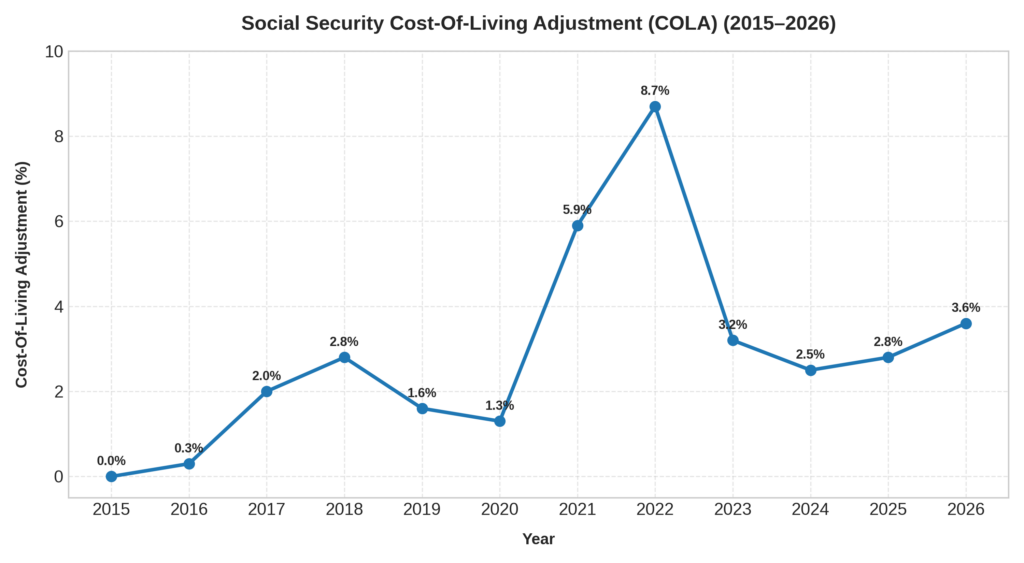
Data gathered from official Social Security Administration COLA records.
While smaller than the historic 8.7% spike in 2023 driven by post-pandemic inflation, the 2027 bump of 3.6% remains well above the 10-year historical average, reflecting ongoing economic adjustments.
How does the SSA calculate the COLA?
The method used to determine each year’s adjustment is established by federal law. According to the Social Security Administration’s latest COLA breakdown, adjustments are based on increases in the Consumer Price Index for Urban Wage Earners and Clerical Workers (CPI-W).
To make sense of this technical process, think of the Bureau of Labor Statistics as a team of economists tracking a standard “shopping basket” of everyday goods and services. This basket includes:
- Housing & utilities: Rent, home heating, electricity, and water.
- Food & groceries: Everyday staples, from milk and eggs to produce and meats.
- Medical care: Prescription drugs, doctor visits, and medical supplies.
- Transportation & fuel: Gasoline, car repairs, and public transit.
Each month, economists measure how much prices for these items have changed. To set the COLA for the upcoming year, the SSA compares average prices from July, August, and September against the same three-month average from the previous year. The percentage difference between those two quarters becomes the exact COLA percentage added to your check come January.
Navigating Fixed Incomes When Living Costs Keep Rising

While a 3.6% benefit increase provides welcome relief, many older adults feel that everyday expenses continue to outpace their monthly income. Economic data from the Bureau of Labor Statistics (explore BLS consumer price data) and inflation tracking tools (examine historical inflation rates) indicate that the overall cost of living has risen significantly over recent years, placing a heavy strain on households living on fixed budgets.
When every dollar counts, reviewing various facets of your household budget can help stretch your income further and uncover hidden savings.
Review healthcare and prescription coverage
Healthcare expenses often make up a large portion of a senior’s monthly budget. Taking time to review Medicare Advantage or Part D prescription drug plans during open enrollment ensures you are not paying for unnecessary extras. Furthermore, look into savings programs like Medicare’s Extra Help, which significantly reduces prescription drug costs for qualifying individuals.
Take advantage of local senior discounts and tax relief
Numerous federal, state, and local programs exist to ease financial obligations for older adults. You can explore property tax exemptions and deductions designed for older Americans by reviewing IRS tax information for seniors. Additionally, utility payment assistance programs like the Low-Income Home Energy Assistance Program (visit LIHEAP state assistance directory) help manage heating and cooling bills, while municipal transportation systems often offer discounted senior transit fares.
Audit monthly subscriptions and household bills
Over time, recurring bills can leave less room in a fixed budget. Take an inventory of streaming services, magazine subscriptions, club memberships, and home utility packages. Contact providers to ask about senior loyalty discounts or bundle adjustments to trim unnecessary monthly expenses.
Explore federally funded accessibility programs
Many older adults are unaware that certain essential assistive services and communication tools are available at no cost through federal initiatives. Under Title IV of the Americans with Disabilities Act, the federal Telecommunications Relay Service (TRS) fund supports specialized communication access for individuals with hearing loss. Exploring government-backed accessibility programs ensures you take full advantage of benefits established to support independent living without out-of-pocket costs.
Taking Control of Your Financial Well-Being as Living Costs Rise
Navigating the financial realities of aging can sometimes feel overwhelming, particularly when fixed incomes must stretch to cover rising living costs. While the 2027 COLA increase of 3.6% offers helpful relief for millions of Americans, combining this adjustment with proactive financial reviews, healthcare checks, and community assistance programs can provide you with more financial stability and greater peace of mind. By staying informed and utilizing available resources, older adults can protect their financial well-being, maintain their independence, and continue living life fully.
Frequently Asked Questions
When will the 2027 COLA increase show up in my Social Security check?
The 3.6% COLA increase officially takes effect with Social Security benefits payable for January 2027. For Supplemental Security Income (SSI) beneficiaries, payments reflect the increase on December 31, 2026, because January 1 is a federal holiday.
Do I need to apply or take action to receive the 2027 COLA increase?
No. The Social Security Administration automatically calculates and applies the Cost-of-Living Adjustment to all eligible beneficiaries. You do not need to fill out any forms or make a request.
Will Medicare Part B premiums lower my net COLA increase?
If you have Medicare Part B premiums deducted directly from your monthly Social Security check, any increase in the Part B premium for 2027 will be automatically deducted from your updated gross benefit amount.
How do I check my updated Social Security benefit amount?
The Social Security Administration sends official COLA notice letters by mail starting in December. Beneficiaries can also log into their personal my Social Security account online in December to view their updated benefit statement securely.