Strength Training for Seniors: 7 Exercises You Can Do at Home


Key Takeaways
- Older adults lose muscle mass and bone density naturally over time, which can lead to age-related muscle loss, increased fall risk, and loss of independence.
- Research shows that 90 to 119 minutes of weekly resistance training lowers all-cause mortality risk by 13% and cardiovascular disease mortality by 19%.
- Effective home exercises include wall pushups, chair squats, seated rows, standing biceps curls, seated overhead presses, heel raises, and glute bridges.
- Starting with bodyweight movements before adding light weights or resistance bands helps protect joints and prevent injury.
- Strength training improves cognitive health, balance, and the ability to perform everyday tasks like climbing stairs or carrying groceries.
Eating right and staying active have always been, and always will be, two of the most effective ways to protect your health. Yet when it comes to adding years to your life and life to your years, incorporating strength training is one of the most impactful changes you can make.
While physical activities like brisk walking, swimming, and cycling are rightly recognized for their cardiovascular benefits, strength training, or resistance exercise, provides several unique health benefits. Research increasingly points to strength training as a cornerstone of healthy aging, reporting that it offers direct benefits for brain health, joint stability, balance, and overall longevity.
Some older adults might feel like strength training is mostly for young people. You might be intimidated by the thought of heavy weights and intense lifting, but you don’t have to join a gym to get stronger. In fact, you can build strength and benefit your overall health right from your living room. By taking a gradual approach and focusing on your form, simple strength-training movements can greatly improve your quality of life.
Why Strength Training is Important for Seniors
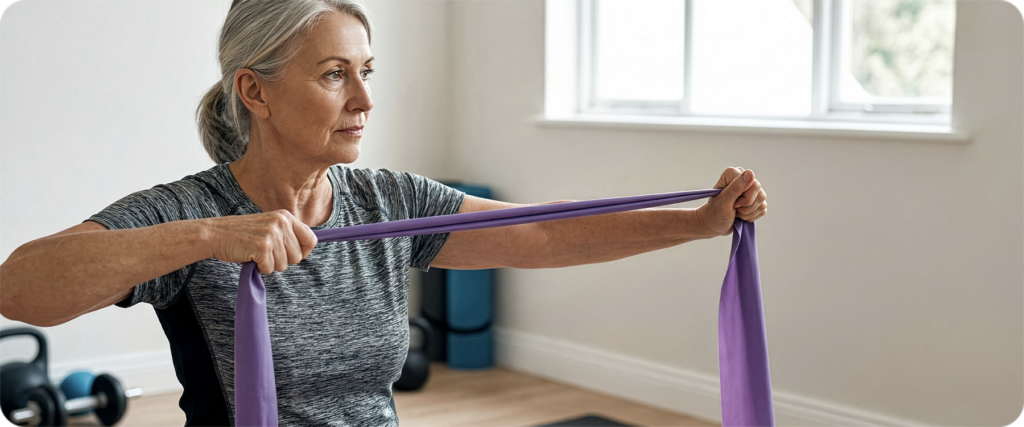
As we age, our bodies naturally lose muscle mass and physical strength over time. Bone density also decreases over time, raising the risk of fractures and osteoporosis. Strength training directly counters this natural muscle loss by placing healthy stress on bones and muscles, stimulating them to rebuild and stay strong.
Beyond preserving muscle, regular resistance exercise offers significant long-term health benefits:
- Promotes longevity: A Harvard-led study tracking over 140,000 adults found that 90 to 119 minutes of resistance training per week was associated with a 13% lower risk of all-cause mortality, a 19% lower risk of dying from cardiovascular disease, and a 27% lower risk of dying from neurological conditions like dementia.
- Enhances cognitive health: Working muscle groups release chemicals that support brain health, helping protect memory and focus.
- Reduces fall risk: Exercises that target the legs and abdomen improve overall balance and joint health, reducing the likelihood of accidental falls.
- Simplifies daily tasks: Stronger muscles mean everyday chores, such as lifting laundry baskets or getting up and down from bed, require much less effort.
How to Get Started Safely

If you are new to strength training or returning after a break, don’t worry about adding weights until you feel comfortable with body weight exercises. These exercises include simple yet effective at-home workouts like wall push-ups or chair sits. Simply moving your body with intention and repetition allows your joints, tendons, and muscles to benefit without excessive strain.
Once a bodyweight movement feels comfortable and easy to perform for 10 to 12 repetitions, you can gradually introduce more resistance. This might mean using light hand weights, holding full water bottles, or incorporating flexible resistance bands.
Essential safety guidelines
- Warm up first: Spend five minutes before exercising stretching and performing light movements, such as marching in place or shoulder rolls. This loosens you up and prepares your muscles.
- Listen to your body: Muscle fatigue is normal during exercise; sharp pain or joint discomfort is a signal to stop immediately.
- Consider a workout partner: Having a friend, family member, or neighbor exercise with you adds social enjoyment and provides extra safety when trying new exercises.
- Focus on form: Always try to maintain slow, controlled movements. Rushing through repetitions with poor form is less effective and unsafe.
- Consult professional guidance: If you have existing health conditions, balance concerns, or recent injuries, working with a physical therapist or certified personal trainer can help you incorporate strength training safely. You can also explore instructional videos from trusted resources like the National Institute on Aging or AARP for visual demonstrations.
7 At-Home Strength Training Exercises for Seniors

Perform these movements two to three times per week, allowing at least one rest day between sessions for muscle recovery. Always breathe naturally throughout each movement, exhaling during the effort and inhaling on the return, and stay hydrated through every exercise.
1. Wall pushups
Wall pushups strengthen the chest, shoulders, triceps, and upper back without placing heavy pressure on the wrists or lower back.
- How to do it: Stand facing a wall, about arm’s length away. Place your hands flat against the wall at shoulder height and width apart. Slowly bend your elbows to bring your chest toward the wall, keeping your body in a straight line. Push through your palms to return to the starting position.
- Repetitions: 8 to 12.
- Modifications: To make it easier, step closer to the wall. To make it more challenging, step your feet slightly further back.
2. Chair squats
Squats target the quadriceps, hamstrings, and glutes. These are the primary muscles responsible for standing up, sitting down, and climbing stairs.
- How to do it: Stand in front of a sturdy chair with your feet shoulder-width apart. Lower your hips back and down as if you are about to sit, keeping your chest upright. Lightly touch the seat with your glutes, then press through your heels to stand back up.
- Repetitions: 8 to 10.
- Modifications: If needed, place your hands on the armrests or sit fully on the chair before standing back up. As you gain strength, perform the movement without touching the chair, keeping it behind you just in case you lose balance.
3. Seated cable/band rows
This exercise strengthens the upper back and rear shoulder muscles, which improves posture and supports shoulder joint stability.
- How to do it: Sit upright on a firm chair with your feet flat on the floor. Wrap a light resistance band securely around a sturdy table leg or foot anchor in front of you. Hold the ends of the band with arms extended. Pull your elbows back past your torso, squeezing your shoulder blades together. Slowly release back to the start.
- Repetitions: 10 to 12.
- Modifications: If you do not have a resistance band, perform the motion without one, focusing on intentionally squeezing your shoulder blades together at the end of the pull.
4. Standing biceps curls
Biceps curls strengthen the front of the arms, aiding in pulling movements like lifting packages or carrying bags.
- How to do it: Stand tall or sit in an upright chair holding light hand weights or soup cans at your sides, palms facing forward. Keep your elbows tucked close to your ribs as you bend your arms to lift the weights toward your shoulders. Lower them back down with control.
- Repetitions: 10 to 12.
- Modifications: Start with no weights at all to practice the motion, then progress to household items, then dumbbells as your strength improves.
5. Seated overhead press
This exercise builds strength in the shoulders and upper chest, helping you safely lift objects onto high shelves.
- How to do it: Sit upright in a chair with back support. Hold light weights at shoulder height with your palms facing forward and elbows bent. Gently press the weights straight up overhead until your arms are extended, without locking your elbows. Slowly lower back to shoulder height.
- Repetitions: 8 to 10.
- Modifications: If shoulder tightness limits your range of motion, press the weights slightly forward at a 45-degree angle rather than straight up overhead.
6. Standing heel raises (calf raises)
Heel raises strengthen the lower legs and ankles, which play a crucial role in balance and stride stability when walking.
- How to do it: Stand tall behind a sturdy chair or counter, placing your hands lightly on the surface for balance support. Slowly lift your heels off the floor, rising up onto the balls of your feet. Hold for a brief pause at the top, then slowly lower your heels back to the floor.
- Repetitions: 12 to 15.
- Modifications: Keep both feet on the ground for maximum stability. To increase the challenge, pause for two to three seconds at the top of each lift.
7. Glute bridges
Glute bridges strengthen the lower back, core, and hips, which helps support spinal alignment and ease lower back discomfort.
- How to do it: Lie flat on your back on a comfortable exercise mat or carpeted floor with your knees bent and feet flat on the floor, hip-width apart. Arms rest flat at your sides. Press through your heels to lift your hips toward the ceiling until your body forms a straight line from knees to shoulders. Squeeze your glutes at the top, then slowly lower your hips back down.
- Repetitions: 8 to 10.
- Modifications: If getting down to the floor is difficult, this exercise can also be performed safely while lying flat on a firm bed.
Frequently Asked Questions
Is it ever too late to start strength training?
No. Research consistently shows that older adults in their 80s and 90s can build muscle, increase bone density, and improve mobility through regular strength training.
How heavy should my weights be?
When transitioning from bodyweight to weights, choose a resistance level where you can complete 10 to 12 repetitions with good form, while feeling moderate muscle fatigue on the final two reps. If your form breaks down or you feel joint strain, the weight is too heavy.
Can strength training help with arthritis?
Yes. Strengthening the muscles surrounding arthritic joints helps absorb impact and reduces joint friction. Always move through a pain-free range of motion and consult your doctor before starting new exercises during an arthritis flare-up.
How often should seniors do strength training?
Aim for two to three non-consecutive days per week. Rest days allow your muscle tissues time to repair, rebuild, and grow stronger.