How to Maintain Your Hearing Health as You Get Older
Key Takeaways
- Hearing loss is a common experience as people age, but there are practical ways to prevent hearing loss and slow its progression.
- Lifestyle factors such as prolonged exposure to loud noises, a family history of hearing loss, or the use of certain medications can contribute to the development of hearing loss.
- Simple ear health tips like staying active, maintaining a balanced diet, keeping ears clean, and getting regular check-ups go a long way toward protecting your hearing as you age.
- Research shows a strong connection between hearing health and brain health, making it even more important to address hearing loss early.
- Solutions for managing hearing loss include hearing aids, assistive listening devices, captioned phones, and smartphone accessibility features.
Your hearing helps you stay connected with loved ones, enjoy your favorite activities, and navigate the world around you. From the laughter of grandchildren to the melody of your favorite song, the sounds around us help add meaning and fulfillment to our lives. Many of us experience changes in our hearing as the years pass, and it’s natural to have questions about why this happens and what we can do about it.
When you understand how to prevent hearing loss, you’ll be better equipped to make informed decisions about your hearing health and continue enjoying the sounds that enrich your life.
What Causes Hearing Loss in Older Adults?
Hearing loss is a common concern for many seniors. Several factors can contribute to this, with the most common being:
The natural aging process
As we get older, the delicate structures in our inner ears may gradually break down. This is a normal part of aging, but it can lead to what doctors call age-related hearing loss.
Exposure to loud noises
Being around loud sounds, whether at work or during leisure activities, can damage our hearing over time. This includes noises from machinery, loud music, or even common household equipment like garbage disposals, blenders, lawnmowers, and leaf or snow blowers. Knowing how to prevent hearing loss includes knowing where potential damage comes from.
Family history
Sometimes, our genes play a role in the development of hearing loss. If your parents or grandparents had hearing problems, you might be at higher risk, too.
Certain health conditions
Some illnesses, especially those that cause high fevers like meningitis, can damage the parts of our ears responsible for hearing.
Medications and hearing loss
It’s important to know that some medicines can affect our hearing. While most medications are safe when taken as directed, a few can potentially impact our ears, especially if used for a long time or in high doses. Ask your doctor how to protect your hearing as it relates to your medication for more information.
Protecting Your Hearing Health
Learning how to protect your hearing starts with early awareness. The sooner you notice your hearing is affected, the sooner you can embrace ways to prevent hearing loss from having an impact on overall brain function and even your balance.
Be mindful of loud noises
Try to avoid very loud sounds when possible. If you can’t avoid them, use earplugs or noise-canceling headphones to protect your ears.
Keep the volume down
When listening to music or watching TV, keep the volume at a comfortable level. If others can hear your headphones, the volume is probably too high.
Take breaks from noise
If you’re in a noisy environment, try to step away for quiet breaks now and then. This gives your ears a chance to rest.
Stay active and eat well
Regular exercise and a healthy diet can improve blood flow to all parts of your body, including your ears. This can help keep your hearing sharp. Certain supplements, such as vitamins A, C, and E, magnesium, and zinc, may also help protect your hearing health.
Get regular check-ups
Visit an audiologist or hearing instrument specialist every 2–3 years for a comprehensive hearing health check-up. These can help catch any hearing problems early when they’re easier to treat.
Be aware of your medications
Always talk to your doctor about any medications you’re taking. If you’re concerned about how a medicine might affect your hearing, don’t hesitate to ask questions.
Have an ear hygiene routine
One of the simplest ear health tips is also one of the most overlooked: keeping your ears clean. Earwax is normal and actually serves a protective purpose, but too much of it can build up over time and muffle your hearing.
A few good habits to follow:
- After showering, gently dry the outer ear with a soft towel. Avoid inserting anything into the ear canal, including cotton swabs, which can push wax deeper inside.
- If you notice a feeling of fullness in your ears, muffled sounds, or an earache, it may be a sign of earwax buildup. A doctor or pharmacist can recommend safe options for softening and removing excess wax at home, or your doctor can flush the ears in the office.
- Avoid swimming in water that may carry bacteria, and use earplugs when you do swim. Moisture left in the ear canal can lead to infections that affect hearing.
Keeping up with basic ear care is one of the more straightforward ways to prevent hearing loss from avoidable causes.
Signs of Hearing Loss to Watch For

It’s important to recognize the signs of hearing loss. You might be experiencing hearing loss if:
- You often ask people to repeat themselves
- You have a hard time hearing over the phone
- You have trouble hearing in noisy places
- You find it hard to follow conversations involving more than two people
- You think others are always mumbling
- You need to turn up the TV or radio volume higher than before
If you notice any of these signs, it’s a good idea to talk to your doctor. They can check your hearing and suggest ways to help.
Understanding Tinnitus (Ringing in the Ears)
Many people with hearing loss also experience tinnitus, a persistent ringing, buzzing, or hissing sound in one or both ears. It’s more common than most people realize. According to the American Tinnitus Association, roughly 15% of the general public experiences some form of tinnitus.
Tinnitus is not a condition in itself but a symptom, often linked to noise exposure, age-related hearing changes, earwax buildup, or certain medications. In some cases, treating the underlying cause can reduce or eliminate it. In others, managing it becomes part of daily life.
If you or someone you know is living with tinnitus, these strategies may help:
- Reduce exposure to loud sounds. Loud environments can worsen tinnitus symptoms. Ear protection is one of the best tools for managing it.
- Talk to your doctor. A hearing specialist can help determine whether the tinnitus is connected to hearing loss, a medication, or another treatable cause.
- Use background sound. Soft background noise, such as a fan, white noise machine, or quiet music, can make tinnitus less noticeable, especially at night.
- Limit caffeine and sodium. Some people find that cutting back on caffeine and salt reduces the intensity of their symptoms, though results vary.
Tinnitus can feel isolating, but it doesn’t have to be something you manage alone. Connecting with a hearing care professional is a good first step.
The Connection Between Hearing and Brain Health
Protecting your hearing as you age goes beyond being able to hear clearly in a conversation. Research has found a meaningful link between hearing loss and cognitive decline. A study published in JAMA Neurology found that people with untreated hearing loss have a higher risk of developing dementia than those who address their hearing loss with treatment.
Here is why researchers believe this connection exists:
- When hearing is impaired, the brain works harder to process sound, which can take energy away from other cognitive functions like memory and attention.
- Hearing loss often leads to social withdrawal. Staying socially engaged is one of the ways to prevent cognitive decline, so isolation can compound the risk.
- Reduced auditory stimulation over time may contribute to changes in brain structure and function.
This does not mean that hearing loss causes dementia, but it does mean that taking steps to protect your hearing and treat it early is worthwhile for your overall health, not just your ears. Regular hearing check-ups, wearing hearing aids when recommended, and staying socially active are all things that support both hearing health and brain health.
The Importance of Hearing Health

Good hearing is more than just being able to enjoy music or conversation. It helps us feel close to those we love, engage in social activities, and even stay safe by hearing important sounds around us.
Remember, some hearing loss is a normal part of getting older, but knowing how to protect your hearing as you age allows you to take simple steps to maintain your hearing health for years to come.
If you have concerns about your hearing or how your medications might affect it, don’t hesitate to speak with your healthcare provider. They can offer personalized advice, give you ear health tips, and help you make informed decisions about your hearing health.
Taking care of your hearing is an important part of staying healthy and active as you age. With a little awareness and some simple steps, you can help ensure that you continue to enjoy all the sounds life has to offer.
Solutions for Managing Hearing Loss
There are several effective ways to manage hearing loss and stay connected to the people and activities you enjoy.
Hearing Aids
Hearing aids are the most common devices for hearing loss. They come in various styles, including behind-the-ear and in-the-ear canal options.
Today’s hearing aids also offer customizable settings to fit your specific needs. Many can also connect to smartphones, tablets, and other devices for added convenience.
Assistive Listening Devices
Assistive listening devices, also known as ALDs, are powerful tools that amplify sounds and reduce background noise, making it easier to hear in noisy environments.
There are three common types of ALDs:
- FM systems: A device that transmits sound to a wearable receiver through radio signals
- Loop systems: Special systems used in theaters and places of worship that improve hearing aid function
- Personal amplifiers: A simple, portable solution for one-on-one conversations or watching television
Smartphone Accessibility
Most smartphones today include built-in accessibility features that can make a real difference for people with hearing loss. These features are free to use and easy to turn on in your phone’s settings.
Some of the most useful options include:
- Live captions: Both Android and iPhone® offer live captioning that displays spoken words as text on your screen during phone calls, videos, or in-person conversations.
- Visual alerts: Instead of relying on a ringtone, your phone can flash the screen or vibrate to notify you of incoming calls, messages, or app alerts.
- Hearing aid compatibility: Many smartphones are designed to work directly with Bluetooth™-enabled hearing aids, streaming audio straight to your ears.
- Sound amplification apps: Several apps are available that use your phone’s microphone to boost and clarify sounds in your environment, functioning like a personal amplifier.
Exploring these features is one of the more accessible ways to prevent hearing loss from getting in the way of daily communication, especially if you are not yet ready for hearing aids or other devices.
Captioned Phones
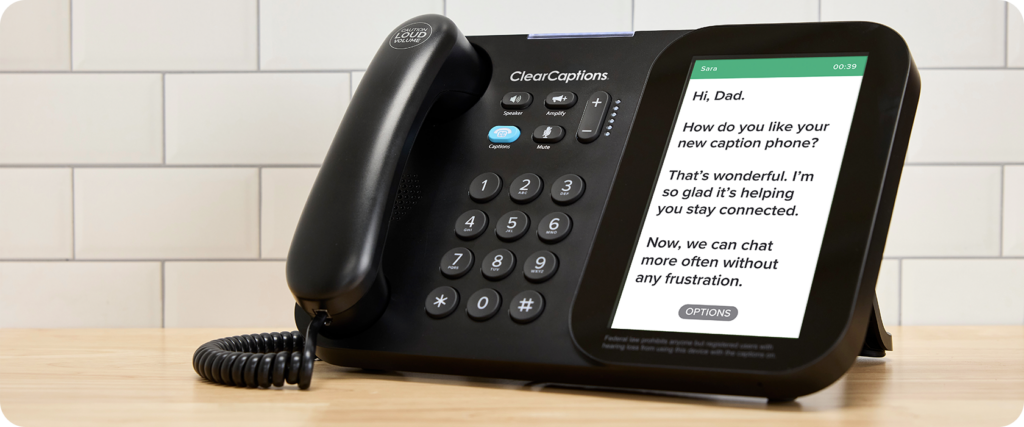
If talking on the phone has become a chore, a captioned phone might be the right tool for you. Specially designed for seniors and those with hearing loss, phones like the ClearCaptions Phone make it easier to catch every word of a conversation.
As the person on the other end of the line speaks, their words appear as captions on a large, easy-to-read screen. This helps ensure that important details are not missed during phone calls with friends, family members, or doctors.
Thanks to a federally managed program, qualified individuals who are hard of hearing may be able to obtain a ClearCaptions Phone at NO COST to you.
Over-the-Counter (OTC) vs. Prescription Hearing Aids
If you are considering hearing aids, one of the first decisions you will face is whether to go the over-the-counter route or get fitted for prescription devices. Both have their place, and the right choice depends on your level of hearing loss and personal needs.
Over-the-counter (OTC) hearing aids became available to adults in the United States without a prescription in 2022, following a ruling by the FDA. They are designed for adults with mild to moderate hearing loss and can be purchased at pharmacies, electronics stores, and online. They are generally more affordable than prescription options and do not require a visit to an audiologist.
Things to know about OTC hearing aids:
- They work best for mild to moderate hearing loss.
- Most are self-fitted, meaning you adjust them yourself using an app or manual controls.
- They may not provide enough amplification or customization for more significant hearing loss.
- Prices typically range from around $200 to $1,500 per pair.
Prescription hearing aids are fitted and programmed by a licensed audiologist or hearing care professional based on a full hearing evaluation. They are the better option for moderate to severe hearing loss and offer more precise customization.
Things to know about prescription hearing aids:
- They are programmed specifically to your hearing profile.
- The fitting process includes follow-up adjustments to dial in the right settings.
- They tend to cost more, often ranging from $2,000 to $7,000 or more per pair, though some insurance plans offer partial coverage.
- Medicare does not currently cover hearing aids, but some Medicare Advantage plans do. It is worth checking your plan.
If you are unsure where to start, talking to your doctor or scheduling a hearing evaluation with an audiologist is a good first step. They can help you understand the degree of your hearing loss and recommend the most appropriate solution.
Frequently Asked Questions
Here are some of the most frequently asked questions about how to prevent hearing loss.
What are the first signs of age-related hearing loss?
Since the signs may be subtle, age-related hearing loss can be easily overlooked. The most common signs include having a hard time hearing in loud environments, frequently asking others to repeat themselves, or feeling like others are mumbling.
If you notice that you’re withdrawing from social situations because you’re embarrassed or frustrated about how difficult it is to hear, it could be a sign of hearing loss.
Is hearing loss reversible?
Depending on the cause, some types of hearing loss are reversible. Hearing loss caused by ear infections, earwax buildup, or fluid in the ear can often be treated and resolved.
Other types of hearing loss, including those caused by genetics, exposure to loud noises, or damage to the inner ear, are typically not reversible. In this case, it’s a good idea to learn how to manage your hearing loss.
Is there a way to improve hearing?
Devices like hearing aids, assistive listening devices, and captioned phones can help improve your ability to hear.
To protect your hearing, maintain a healthy lifestyle by staying active, eating a balanced diet, protecting your ears from loud sounds, and having regular hearing check-ups. Managing medications that affect hearing can also help preserve your hearing health.