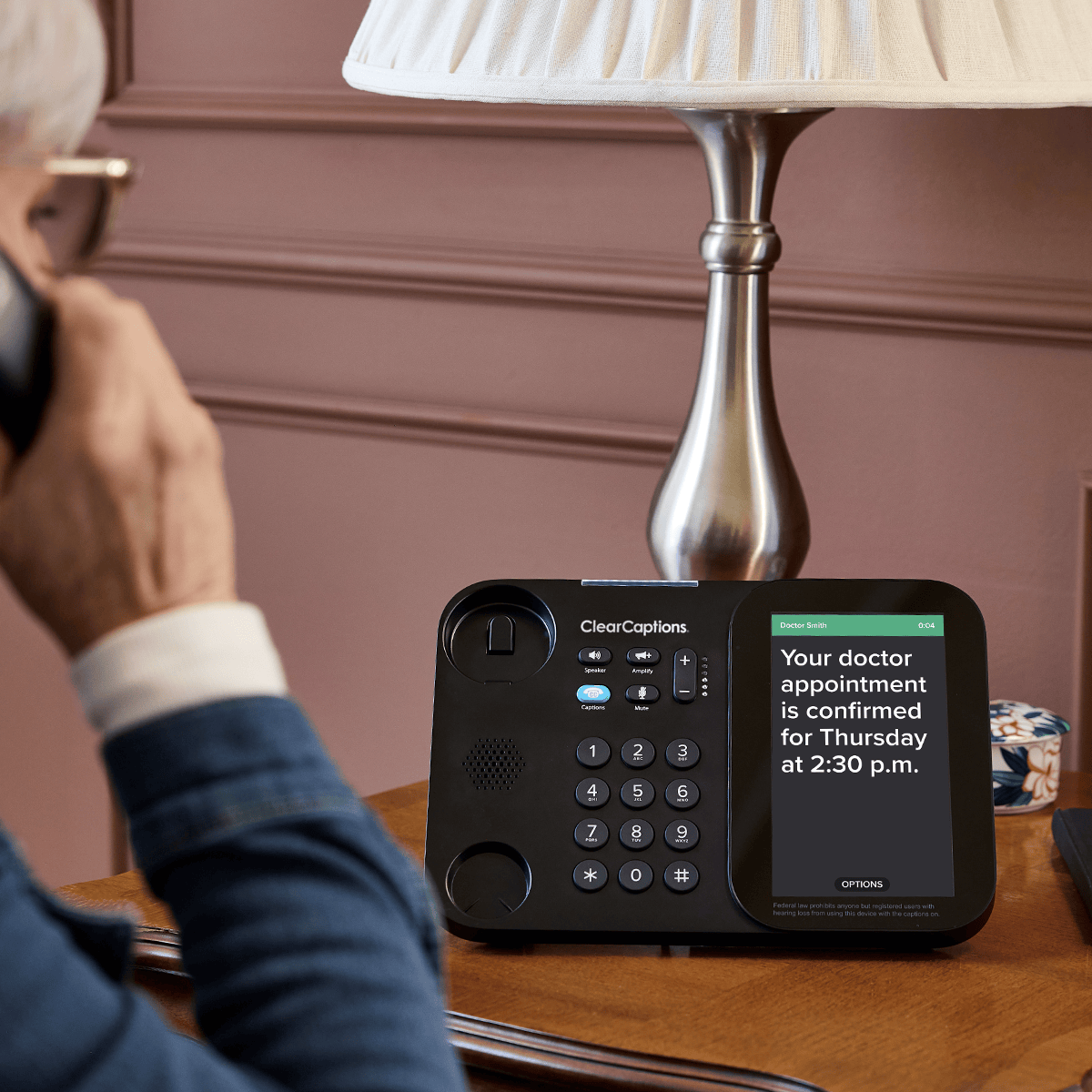
Supporting Seniors with Hearing Loss: A Guide to Caption Phones and Live Captions
Key Takeaways
- Live captioning is a useful accessibility tool that can help with your loved one’s specific needs.
- Live captioning is best used in group settings or during live events.
- Seniors who are hard of hearing can obtain a caption phone at no cost if they meet the eligibility criteria.
- When seniors can listen to and read words on a screen, it increases their confidence, empowers their independence, and helps them age gracefully.
What Is Live Captioning and How Does It Work?
Live captioning is an accessibility service that transcribes spoken words into text. Individuals with hearing loss can use captions to follow the conversation more closely.
While they work in a wide variety of settings, they work best for live virtual events and watching movies or television. They are particularly valuable in group settings, where multiple people are speaking.
Live captions use automatic speech recognition (ASR) software or human captioners to turn spoken words into written text. Since the reader can both listen to and read the words, they can form a better understanding and connection with the conversation.
What Are Caption Phones and How Do They Work?
A caption phone is a device that transcribes a caller’s speech into text on an attached screen. This way, the individual can both hear the spoken words and read the text on the screen, ensuring they never miss a word. Caption phones are uniquely designed to be easy to use for seniors and those with disabilities.
Most caption phone services also feature the ability to:
- Customize the size, font, and color of the captions
- Save captioned voicemails for future playback
- Save and favorite contacts
- Use a light notification system instead of traditional ringing to indicate incoming calls
Often used in place of a traditional home phone, all of these features are designed to help seniors stay connected and feel empowered with their assistive device.
The Distinct Roles of Live Captions and Caption Phones
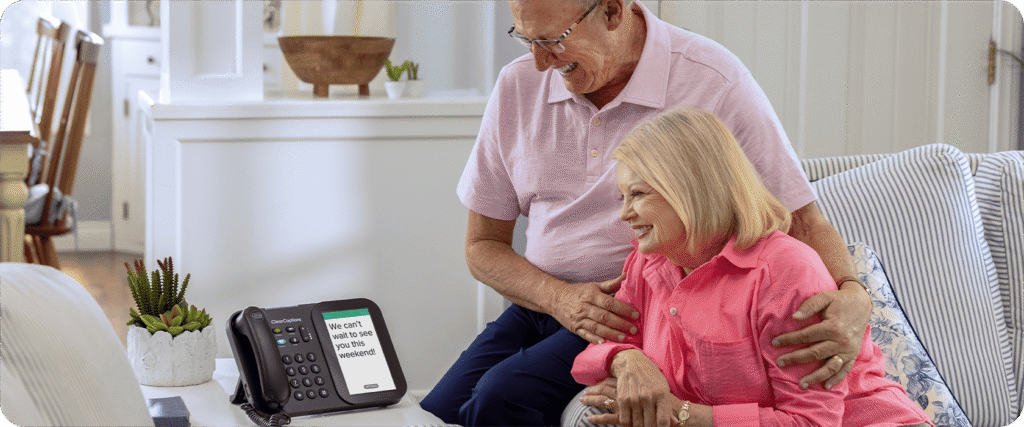
Live captions and caption phones are similar technologies that serve different accessibility purposes.
Live captions display text transcriptions of videos, webinars, broadcasts, and in-person events, making content accessible to a broader audience across multiple platforms. They’re typically used for group settings and digital media consumption.
Caption phones are specifically designed for one-on-one phone calls with family, doctors, businesses, and friends. The captions make it easier to follow along with important conversations easily and naturally, providing more clarity to every call. These phones display written transcripts of the caller’s words as they are speaking.
While live captions focus on multimedia and event accessibility, caption phones are personal communication tools. Both use speech-to-text technology, but caption phones are federally regulated and are often provided at no cost to qualified individuals through services such as ClearCaptions.
Why Caption Phones Are Ideal for Seniors Who Prefer Phone Communication
Caption phones are easy to use and perfect for those who are less tech-savvy. This accessible technology helps seniors maintain their independence and confidence by making communication and connection easier and less stressful.
When choosing the best caption phone service, there are many factors to consider, such as:
- The ease of use of the phone, including the size of the screen and buttons, accessibility options, and other available features such as voicemail
- The level of hearing loss of the senior
- Budget and financial considerations
- Living situations, such as when living independently
Why ClearCaptions is the Industry Leader in Caption Phones
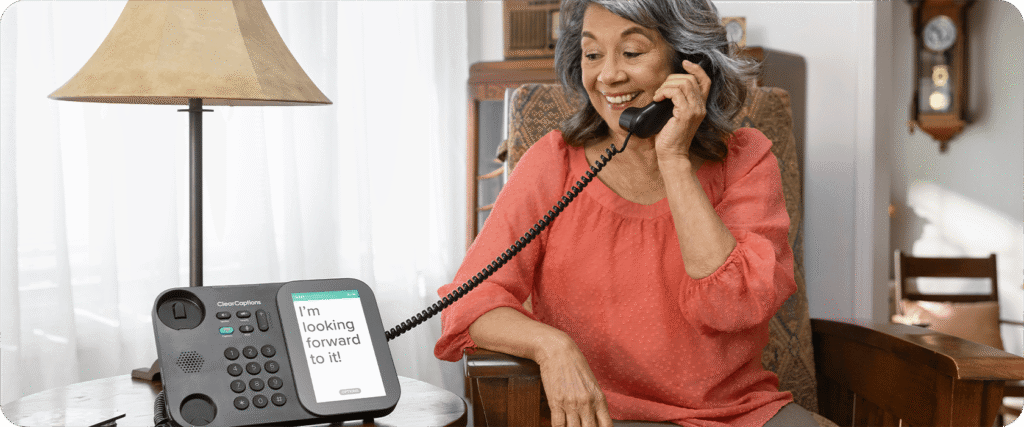
ClearCaptions provides a dedicated caption phone service that is made available through a federally managed program guided by FCC regulations, ensuring a high level of accuracy and complete privacy for personal calls.
Additionally, thanks to special federal funding, qualified individuals with hearing loss can receive a caption phone through ClearCaptions at no cost. ClearCaptions will also send a trained specialist to each customer’s home to set up the phone. These specialists also offer guided training, ensuring each customer feels completely comfortable and confident with the ClearCaptions Phone and its call captioning service.
Every ClearCaptions Phone comes with a lifetime warranty, and the ClearCaptions Support Team is always available to offer continued support to help customers stay connected with their family, friends, and healthcare providers.
Empowering Seniors with the Right Communication Tools
Hearing accessibility technology has evolved to meet many communication needs, and there is a need for every option.
Live captions are ideal for watching TV, streaming videos, or attending events, providing easy-to-use support, especially when on the go. Meanwhile, caption phones are perfect for in-home phone calls, empowering seniors with independence and clearer conversations.
When it comes to caption phones, ClearCaptions is the clear choice. Our service provides relatable training, consistent support, and easy-to-use tools that keep your loved one confidently connected.
Frequently Asked Questions
How do caption phones differ from closed captioning?
Closed captioning displays text on the screen, similar to live captions. Unlike live captions, it also includes descriptions of what is happening in the scene, such as “[door closes]” or “[actor nods].” Caption phones are different in that they display the spoken text of the person on the other end of the phone. These specially-designed phones provide support through phone calls and voicemails only, while closed captioning can be used in a variety of situations, specifically videos, movies, and television shows.
Are caption phones free for seniors?
Thanks to funding secured through the Americans with Disabilities Act (ADA), caption phones from ClearCaptions are available at no cost to eligible individuals. To qualify for a Caption Phone, individuals must certify that they are hard of hearing, reside in the United States or a U.S. territory, communicate in English, and have internet access. ClearCaptions will help you determine eligibility and set you up with a phone and in-home training if you are qualified.
What’s the accuracy difference between live captions and a caption phone?
Live captions are commonly generated using automated speech recognition technology, and in some cases may also be verified by human captioners, depending on the setting.
ClearCaptions uses advanced speech recognition technology and may also involve trained communication assistants when needed to help provide clear captions during phone calls. Because caption phones are structured for personal phone communication, they are designed to support clarity during important conversations.
Does ClearCaptions provide live captioning for video calls or TV?
No. ClearCaptions does not provide live captions for television or video calls. The service is strictly for phone call communications.