Understanding Your Hearing Test Results


Key Takeaways
- Hearing test results are shown on a chart called an audiogram, which maps how well you hear different sounds.
- Normal hearing test results typically fall between -10 and 25 decibels for adults.
- Your audiogram uses simple symbols: circles or triangles for your right ear and Xs or squares for your left ear.
- Understanding your results helps you make informed decisions about your hearing health and treatment options.
- Different levels of hearing loss (mild, moderate, severe) appear at different positions on the audiogram.
After your hearing test, your audiologist will show you a chart with lines, symbols, and numbers. This chart is called an audiogram, and while it might look confusing at first, it’s actually a straightforward way to see how well your ears are working.
Let’s break down what those hearing test results mean so you can better understand your hearing health.
What Is an Audiogram?
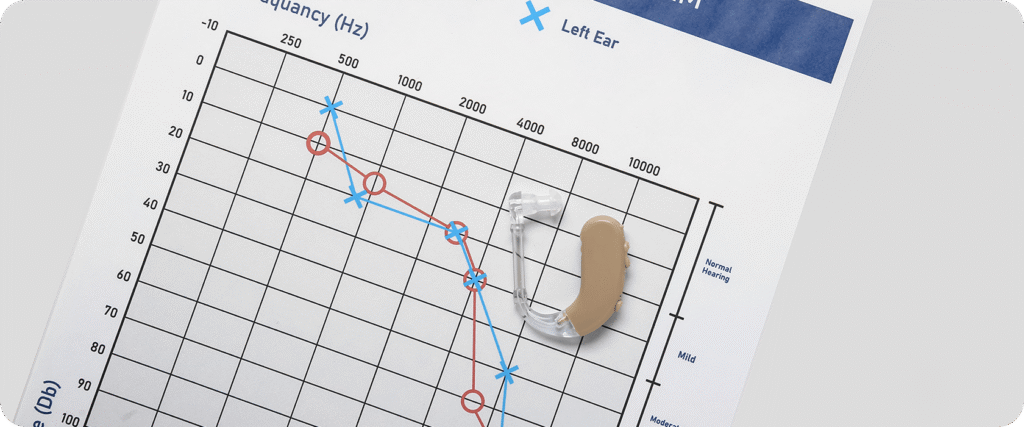
An audiogram is a graph that shows your hearing test results. Think of it as a map of your hearing ability. The chart shows two main things: how loud sounds need to be for you to hear them (measured in decibels) and their pitch (measured in hertz).
Your audiologist uses this chart to determine if you have hearing loss, which ear is affected, and how severe the hearing loss might be.
How to Read Hearing Test Results
Understanding the graph
The audiogram has two main parts:
The vertical line (up and down) shows loudness, measured in decibels (dB). The numbers start at the top with quieter sounds and go down to louder sounds. The top of the chart represents soft sounds like whispering, while the bottom represents very loud sounds like a lawn mower.
The horizontal line (left to right) shows pitch, measured in hertz (Hz). Lower numbers on the left represent low-pitched sounds like a foghorn. Higher numbers on the right represent high-pitched sounds like birds chirping.
Reading the symbols
Your hearing test results use simple symbols to show how each ear hears:
- Circles (O) or triangles: These mark the results for your right ear, often shown in red.
- Xs or squares: These mark the results for your left ear, often shown in blue.
- Lines connecting the symbols: These show your hearing pattern across different pitches.
The placement of these symbols tells you how well you can hear. Symbols near the top of the chart mean you can hear soft sounds easily. Symbols further down the chart mean you need sounds to be louder before you can hear them.
Normal Hearing Test Results by Age
What counts as “normal” hearing can change as we get older. Here’s what you should know:
Adults under 60
For most adults, normal hearing test results fall between -10 and 25 decibels. If your symbols stay within this range across all the frequencies tested, your hearing is considered normal.
Adults 60+
As we age, it’s common to experience some hearing changes, especially with high-pitched sounds. Many adults over 60 may notice their symbols dropping below 25 decibels in the higher frequency range (the right side of the chart). This is called age-related hearing loss, or presbycusis.
Even if you notice some changes in your hearing test results compared to when you were younger, this doesn’t necessarily mean you have a serious problem. However, it does mean you should pay attention to your hearing health and discuss options with your audiologist.
Understanding Different Levels of Hearing Loss
Average hearing test results can vary from person to person, but hearing loss is generally classified into different levels based on where the symbols fall on your audiogram:
- Normal hearing (0-25 dB): You can hear soft sounds like whispering and rustling leaves.
- Mild hearing loss (26-40 dB): You might miss some soft sounds and have trouble hearing in noisy places.
- Moderate hearing loss (41-55 dB): Normal conversation can be difficult without a hearing aid.
- Moderate-to-severe hearing loss (56-70 dB): Conversations are very difficult, and you may need to see a person’s face to understand them.
- Severe hearing loss (71-90 dB): You can only hear very loud sounds.
- Profound hearing loss (91+ dB): You may not hear most sounds, even very loud ones.
Common Patterns in Hearing Test Results
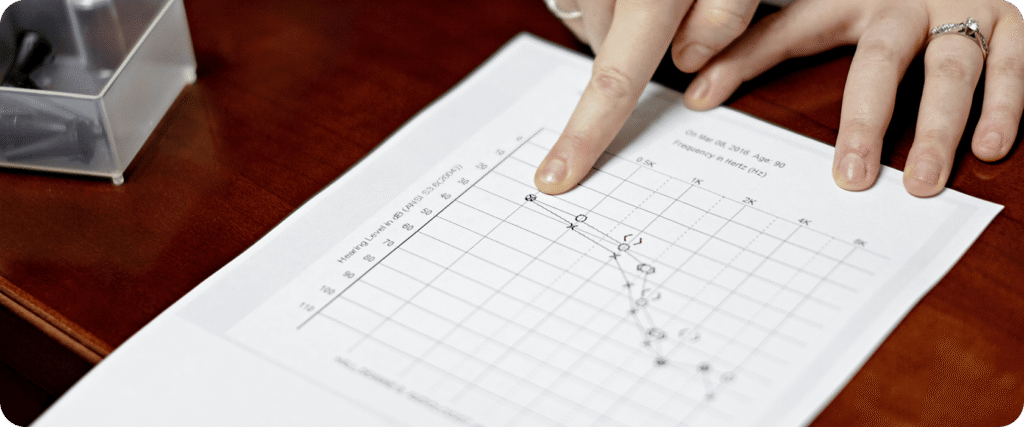
Your audiogram might show different patterns depending on the type of hearing loss:
High-frequency hearing loss
This is the most common pattern, especially in older adults. The symbols on the right side of your audiogram (high pitches) drop down, while the symbols on the left side (low pitches) stay near the top. This means you might have trouble hearing birds singing or understanding certain speech sounds like “s” and “f.”
Flat hearing loss
In this pattern, the symbols form a relatively flat line across all frequencies. This means you have similar hearing loss across all pitches.
Low-frequency hearing loss
Less common than high-frequency loss, this pattern shows symbols dropping on the left side of the chart. You might have more trouble hearing low-pitched sounds like deep voices or thunder.
What Your Results Mean for Your Daily Life
Understanding how to read hearing test results helps you recognize how hearing loss affects your everyday activities. For example:
- If your high-frequency sounds are affected, you might struggle to hear consonants clearly, making speech sound muffled.
- If you have mild hearing loss, you might find it hard to follow conversations in restaurants or crowded places.
- If your hearing loss is more severe, you might rely heavily on reading lips or need people to speak much louder.
Questions to Ask About Your Hearing Test Results
When reviewing your audiogram with your audiologist, consider asking:
- Which ear has better hearing, or is my hearing similar in both ears?
- What type of hearing loss do I have?
- What sounds am I most likely missing in daily life?
- What are my treatment options based on these results?
- How often should I have my hearing tested?
Next Steps After Your Hearing Test

Your hearing test results are just the beginning. If your audiogram shows hearing loss, several options can help:
- Hearing aids: Modern hearing aids are smaller and more effective than ever before.
- Assistive listening devices: Tools like caption phones from ClearCaptions can help you more easily follow phone conversations.
- Communication strategies: Simple changes in how you interact with others can make conversations easier.
- Regular monitoring: Follow-up hearing tests help track any changes over time.
Remember, hearing loss is common, especially as we age. The most important thing is to take action once you understand your results. Many people wait years before addressing their hearing loss, but the sooner you take steps to improve your hearing, the better your quality of life will be.
Frequently Asked Questions
How accurate are hearing test results?
Hearing tests are very accurate when performed by a trained audiologist in a proper testing environment. The test measures exactly how loud a sound needs to be for you to hear it at different pitches.
Can hearing test results change over time?
Yes, your hearing can change over time due to aging, noise exposure, certain medications, or health conditions. That’s why regular hearing tests are important, especially for adults over 60.
What does it mean if my hearing test results are different in each ear?
It’s common for people to have different hearing abilities in each ear. Your audiologist will examine both your ears and determine if the difference is significant enough to affect your daily life or if it requires treatment.
How often should I get my hearing tested?
For adults with normal hearing: every 3-5 years until age 50, then every 1-3 years. Adults over 60 should have annual hearing tests. If you notice any changes in your hearing, schedule a test right away.
Can I understand my hearing test results without a doctor?
While this guide helps you understand the basics of reading an audiogram, it’s important to review your specific results with an audiologist. They can explain what your results mean for your individual situation and recommend the best treatment options.
What should I do if I disagree with my hearing test results?
If you feel your results don’t match your hearing experience, talk to your audiologist. They can explain the results in more detail or schedule a follow-up test. Sometimes, factors like background noise or not understanding the test instructions can affect results.