Hearing Tests for Seniors: What to Expect
Key Takeaways
- Hearing tests are quick, painless, and very important for seniors.
- After the age of 60, it is recommended that most adults have their hearing checked every one to three years.
- There are various types of tests to assess different aspects of a person’s hearing.
- Medicare may cover hearing tests if a primary care doctor recommends them.
- Regular hearing assessments can help address problems early.
You know it’s important to keep up with your yearly physical and biyearly dentist appointments, but when was the last time you had a hearing exam? Staying up-to-date on hearing tests can help address hearing concerns before they become a larger problem.
What Is a Hearing Exam, and Why Is It Important for Seniors?
A hearing exam, also known as audiometry, is a simple, painless check-up that tests aF patient’s ability to hear different sounds, volumes, and pitches. The test is administered by an audiologist, who uses the results to diagnose the type and severity of hearing loss (if any).
Age-related hearing loss is normal, so seniors should schedule regular exams to take care of their hearing health. Early detection of hearing loss can help you find reliable solutions and enjoy continued independence.
When Should Seniors Consider a Hearing Exam?
If you’re over the age of 60 and haven’t had a hearing assessment yet, it’s a good time to schedule one. Some other telltale signs of hearing loss include:
- Trouble hearing voices over the phone
- Turning the TV or radio up louder than usual
- Using closed captions on your TV
- Asking people to repeat themselves
- Feeling dizzy
- Ringing in the ears
- Avoiding social situations due to difficulty understanding
Common Types of Hearing Tests
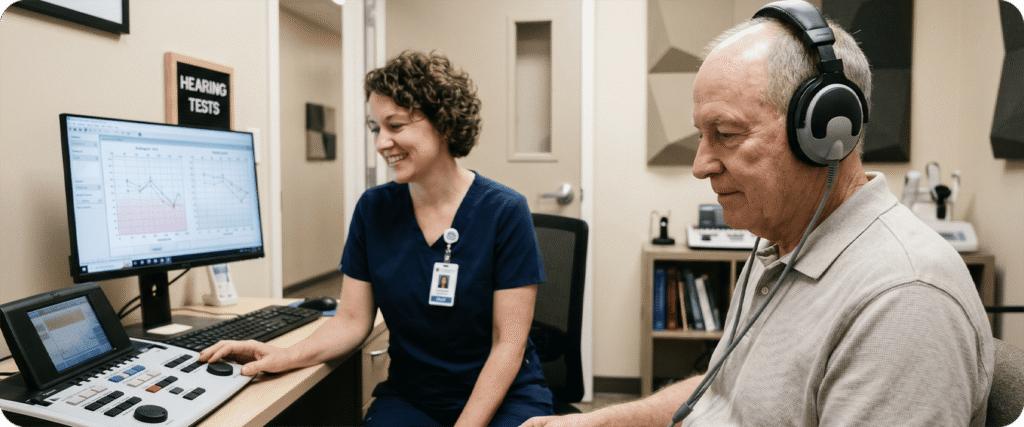
Audiologists use different exams to check specific aspects of their patients’ hearing. Some of the most common hearing tests that benefit seniors include:
- Pure-tone audiometry: Also known as an audiogram test. In this common test, the patient wears headphones and listens for beeps at low volumes and pitches.
- Speech audiometry: This test checks how well the patient understands speech by playing different words through a set of headphones.
- Tympanometry: This test can find middle ear problems by examining how well the eardrum moves.
- Otoacoustic emissions (OAE): This exam checks the tiny hair cells in a patient’s inner ear that facilitate hearing.
Preparing for a Hearing Assessment
Hearing tests are simple procedures that require little to no preparation. However, there are steps you can take to make the appointment go more smoothly:
- Make a list of any ear or hearing problems you’ve had.
- Write down any medicines you take.
- Gently clean around the outside of your ears.
While hearing tests for seniors are non-intensive, you may also want to ask a loved one or caretaker to attend the appointment with you. They can help discuss the results and next steps with the doctor.
Where Can Seniors Get a Hearing Exam?
You can typically schedule a hearing test at audiology clinics, hearing aid centers, and some primary care offices. Ear, nose, and throat doctors (ENTs) specialize in hearing tests. Retail centers may also offer free on-location hearing tests.
If mobility or transportation is an issue, an at-home hearing test may be an option. The AARP offers a free annual hearing test you can take by phone, mobile device, or computer. If you have a primary ENT, ask if they offer virtual consultations to assess hearing remotely.
What to Expect During a Hearing Exam
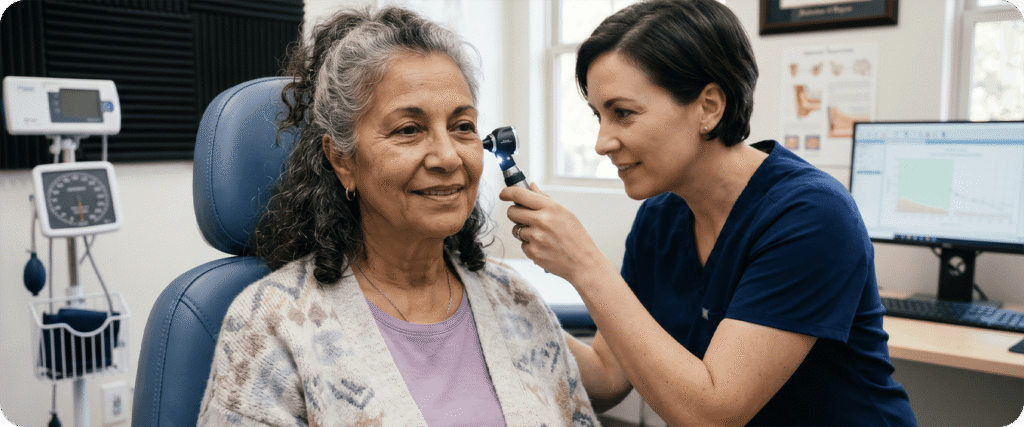
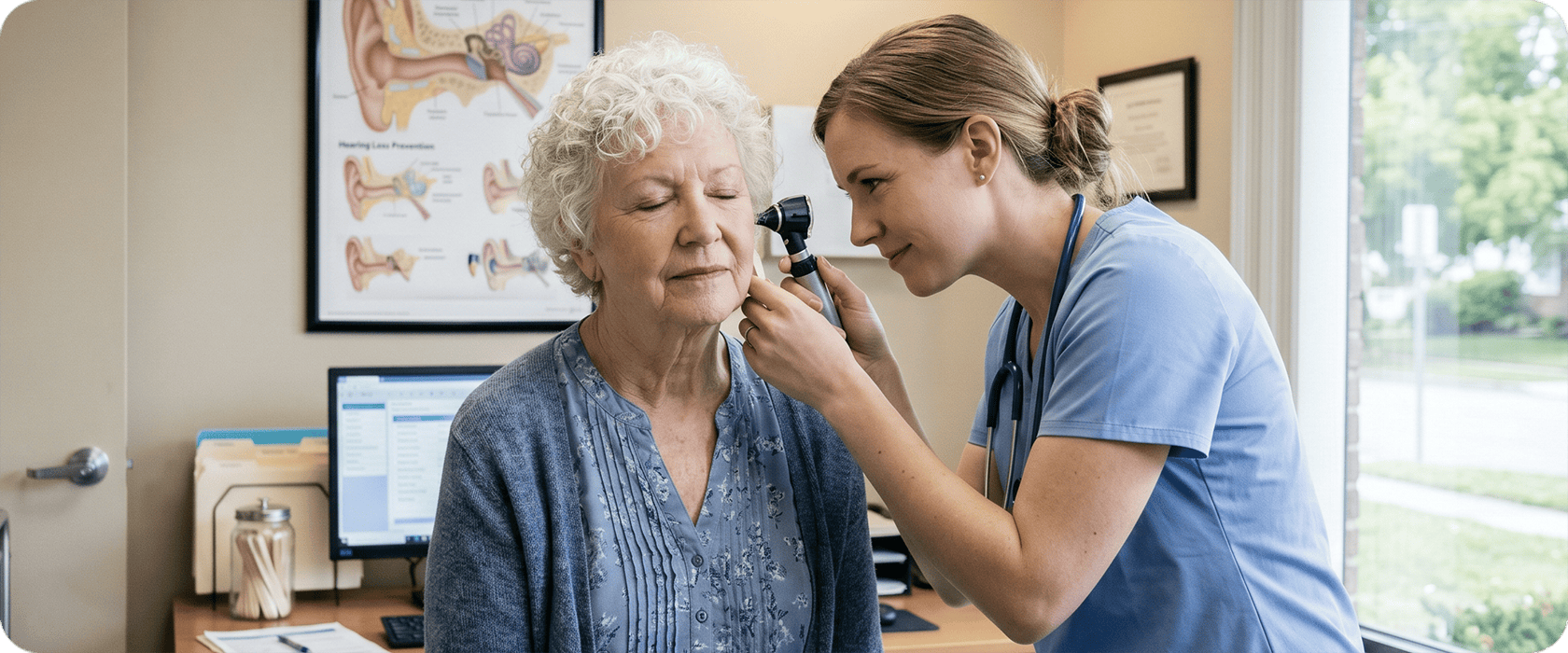
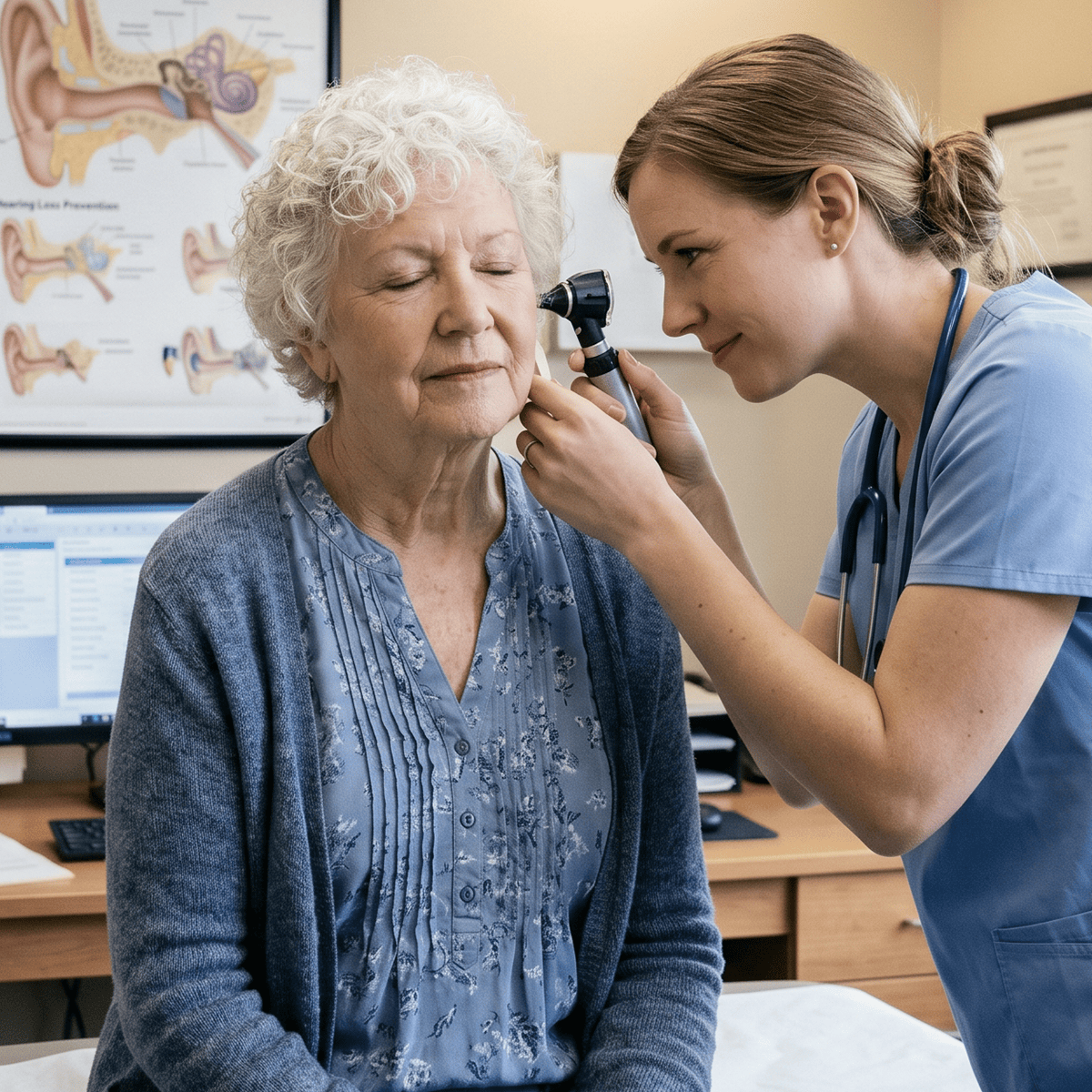
Most hearing tests for seniors take between 30 and 60 minutes. First, the doctor will shine a light inside each ear to check for any wax buildup, fluid, or visual problems within the ear canal or the eardrum.
Then, they will set up the hearing tests. For most tests, the patient will sit in a quiet room or booth wearing headphones and respond whenever they hear certain sounds or words. You may be asked to press a button when you hear a low beep or repeat speech back to assess whether you can hear it clearly.
While new experiences can be stressful, audiometry tests are painless. All you need to do is follow the directions given by the doctor.
What the Results Mean
After the tests, the hearing specialist will explain the results:
- Normal hearing: A person with normal hearing can hear soft sounds across all pitches or frequencies.
- Mild hearing loss: With mild hearing loss, someone may miss softer sounds, especially high-pitched ones, but can still hear most conversations in quiet settings.
- Moderate to severe hearing loss: People with moderate to severe hearing loss miss a lot of sounds, particularly softer ones. They may also have trouble understanding speech, especially in noisy places.
The audiologist will explain if the issue is nerve-related or located in the outer, middle, or inner ear. They will recommend the best treatment based on your needs.
What Happens If You’re Diagnosed With Hearing Loss?
There are many ways to manage your hearing loss. If you’re diagnosed with hearing loss, your hearing care professional may recommend treatments based on the degree and type.
Mild-to-moderate hearing loss can often be improved with the use of hearing aids and assistive listening devices, like the caption phone from ClearCaptions. These tools are typically available for little to no cost to you and can often bridge the gap to allow regular daily communication.
Severe hearing loss may require more involved solutions, such as cochlear implants. Special devices like caption phones can also help those with moderate to severe hearing impairments to stay in communication with friends and family.
As with any medical advice, consult your doctor for recommendations based on your specific needs.
Cost and Insurance Coverage
Medicare often covers diagnostic hearing tests if a doctor orders them; however, it doesn’t cover routine exams or hearing aids.
The good news is that your Medicare Advantage plan, VA healthcare, retiree health insurance, or private healthcare plan may offer additional coverage for audiometry screenings. Additionally, Medicaid may cover hearing tests for seniors, depending on your state. You may also be able to schedule a basic hearing screening at a community health center or a hearing aid company.
Remember, some memberships, like AARP, Costco, and Sam’s Club, entitle you to free hearing screenings without requiring insurance coverage.
Resources and Support for Hearing Loss
If you’ve been diagnosed with hearing loss, there are many resources available to help. Educational support and connections through the Hearing Loss Association of America or clinical services through Veterans Affairs are good places to start.
For high-level resources, the National Institute on Deafness and Other Communication Disorders (NIDCD) provides valuable information on hearing loss and treatment options.
In addition to services and support groups, specialized tools can make life easier. For instance, if you struggle with phone conversations, a caption phone through ClearCaptions may be the answer. These home phones display the caller’s words so you can read and hear at the same time, making phone conversations easier and less stressful for individuals with hearing difficulties.
Next Steps After a Hearing Assessment

After the test, a specialist may suggest that you:
- Get fitted for hearing aids or other devices.
- Schedule additional testing or appointments to address infections or wax buildup.
- Learn different communication strategies to help in difficult situations.
Following their recommendations can help you adapt to or resolve the situation as soon as possible.
Frequently Asked Questions
How often should seniors get a hearing exam?
Most hearing experts recommend that adults over 60 get a hearing exam every one to three years, or immediately if they are experiencing hearing loss or other ear problems.
Can I get a free hearing test as a senior?
While Medicare doesn’t typically cover routine hearing tests, many organizations, including the AARP, HearingLife, and local hearing aid retailers, offer hearing tests for seniors at no cost. Additionally, some insurance plans cover audiometry screenings.
Does Medicare pay for hearing exams?
Medicare covers diagnostic hearing exams if ordered by a doctor, but not the cost of routine hearing screenings or hearing aids. However, some Medicare Advantage plans offer more coverage.
At what age should hearing tests start for seniors?
Seniors should begin hearing tests at around age 60, especially if they have difficulty hearing conversations or understanding speech in noisy environments.
What’s the difference between a hearing screening and a hearing exam?
A hearing screening is a simple test to detect signs of hearing loss, while a hearing exam is a more thorough, medical assessment that provides detailed results on your hearing abilities. An audiogram test is typically used in a hearing exam to measure hearing thresholds.
Are hearing exams painful or uncomfortable for older adults?
No, hearing exams don’t hurt at all. Most patients find the appointments easy, interesting, and even relaxing. If you feel nervous or anxious about the test, ask the doctor to explain each step.