Captioning and Hearing Assistance Devices: Who They’re For and How They Help
Key Takeaways
- Captioning and hearing assistance devices help millions of people with hearing loss communicate more effectively in daily life.
- These hearing assistance devices range from caption phones and TV systems to alerting devices and amplification tools.
- A closed caption device for hearing impaired individuals provides text of spoken words so you can read what’s being said.
- Captioning and hearing assistance devices work in various settings, including at home, work, and public spaces.
- Many hearing assistance devices are available at little or no cost through programs designed to help people with hearing loss.
Captioning and hearing assistance devices are technologies designed to help people with hearing loss understand spoken language by providing captions, amplified sound, or visual support.
If you or a loved one has hearing loss, you’ve probably experienced moments of frustration when you couldn’t quite catch what someone said. Maybe you missed an important announcement, struggled to follow a conversation in a noisy restaurant, or had difficulty hearing the TV clearly. Fortunately, captioning and hearing assistance devices can make these everyday situations much easier.
Understanding Captioning and Hearing Assistance Devices
Captioning and hearing assistance devices come in many forms, each designed to help in different situations. Whether you need support during phone calls, while watching television, or in face-to-face conversations, there are hearing assistance devices that can help.
Some of these devices make sounds louder and clearer. Others provide visual information through closed captions for the hearing impaired, so you can read what’s being said. Many modern captioning and hearing assistance devices combine both approaches to give you the best possible experience.
Types of Hearing Assistance Devices
Understanding the different types of hearing assistance devices can help you choose the right tools for your needs.
Caption phones
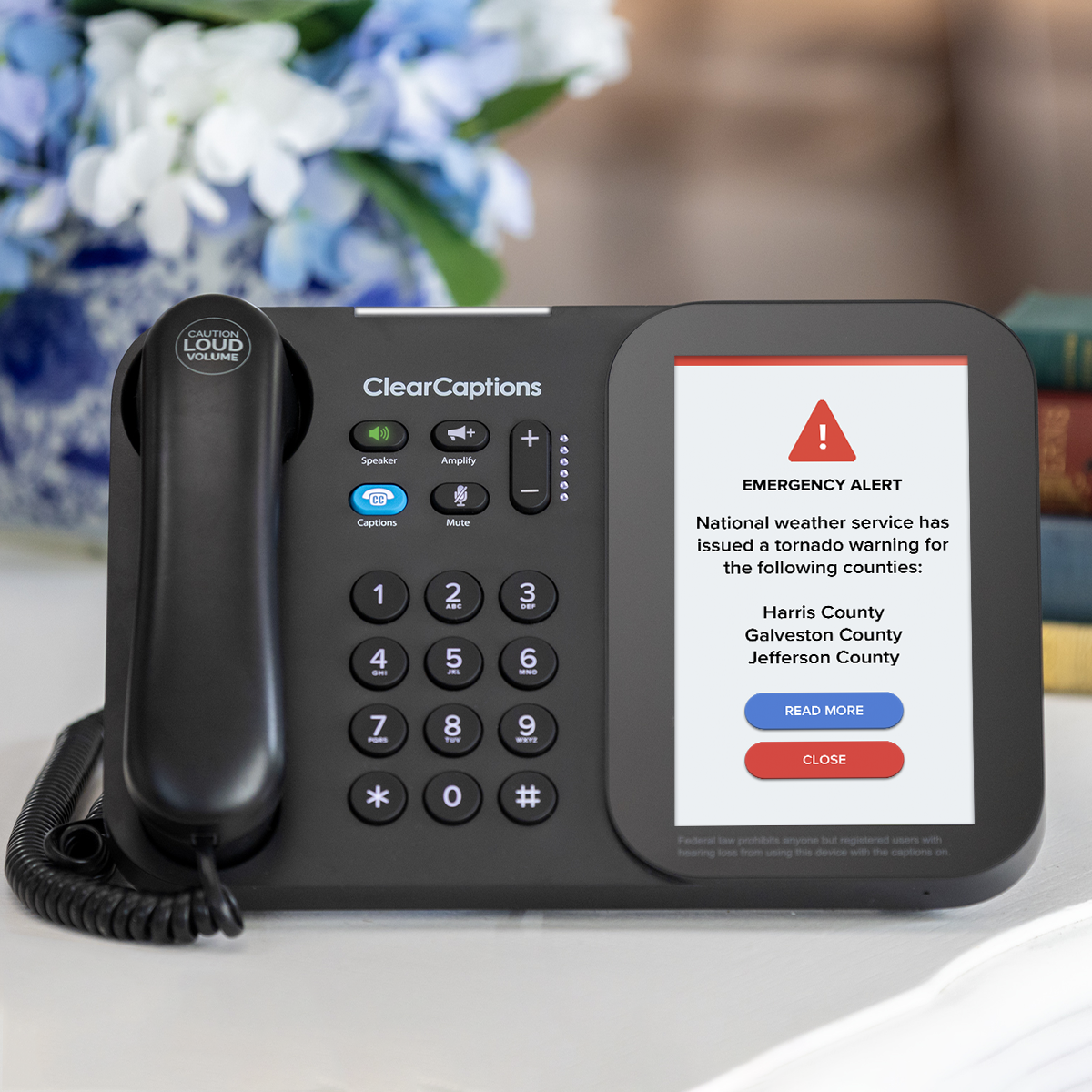
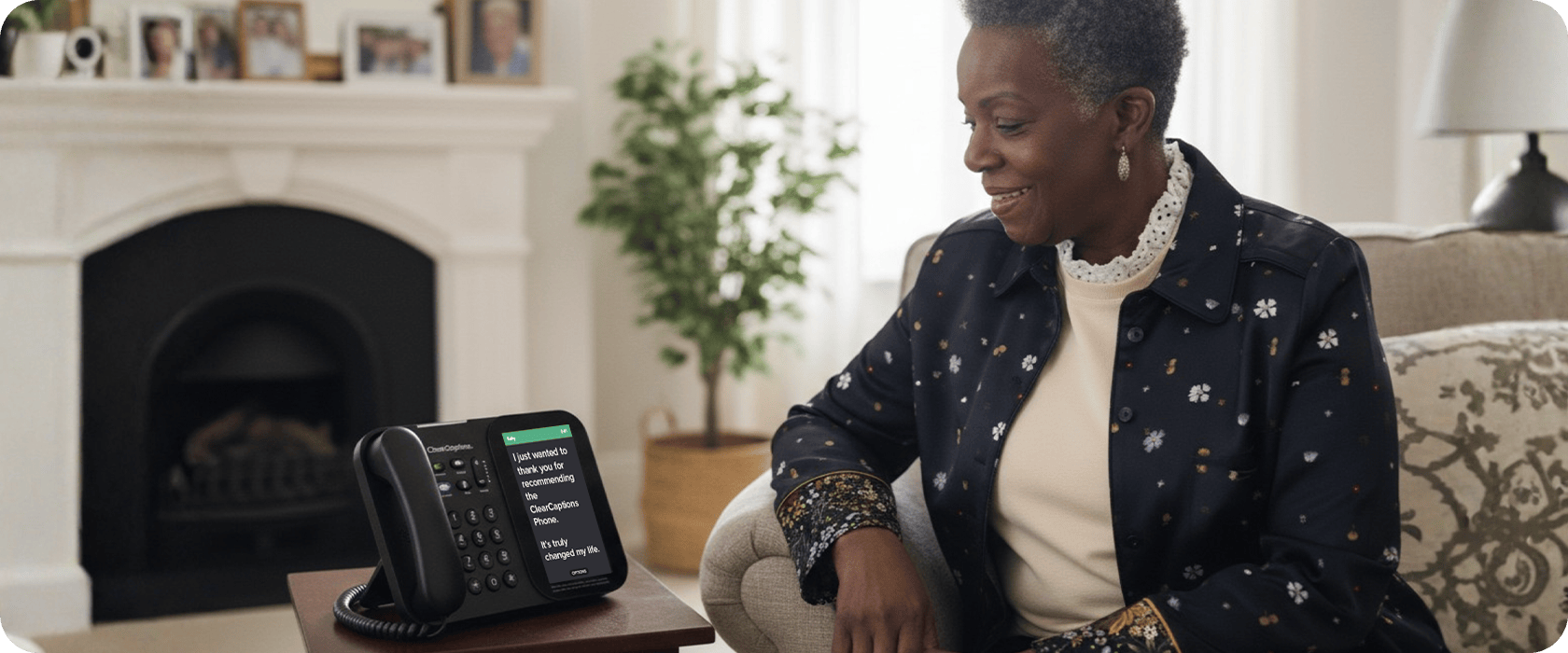
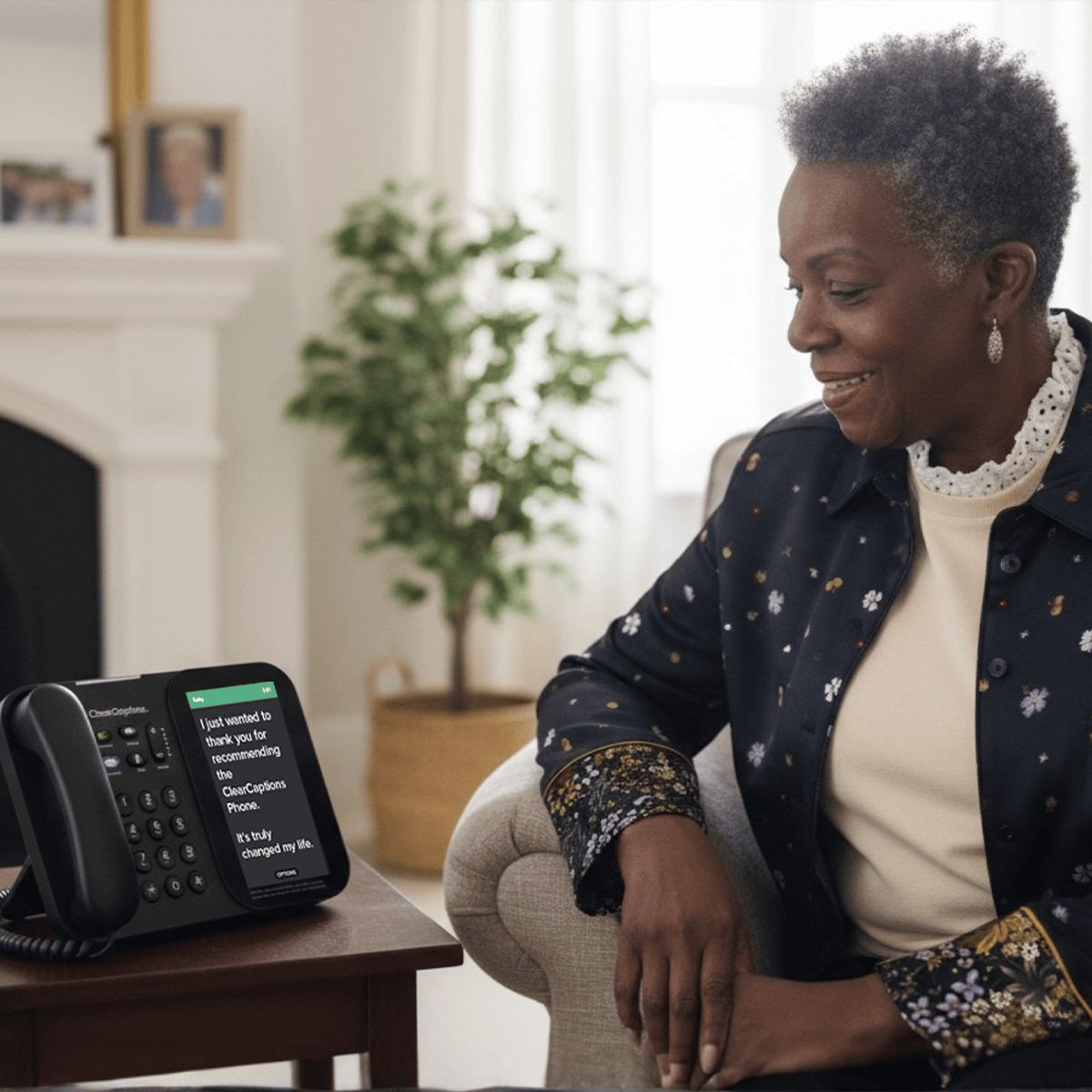
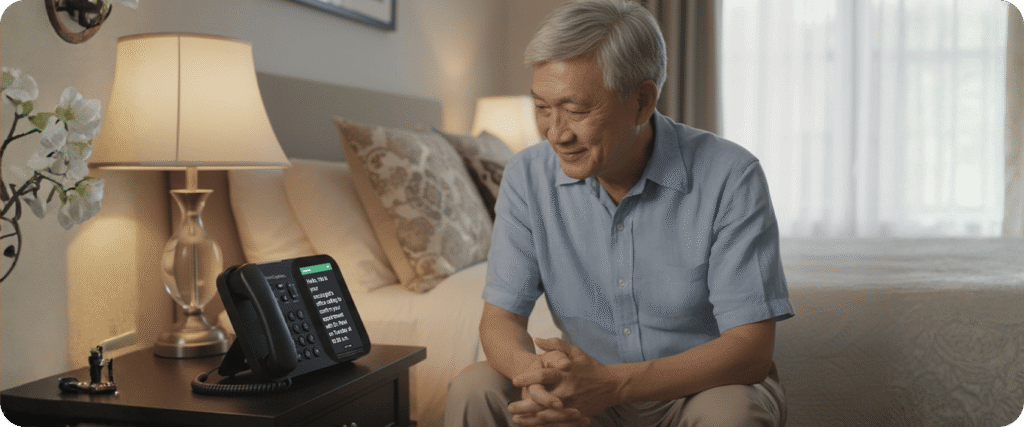
Caption phones display the written text of phone conversations on a screen while callers speak. This closed caption device for hearing impaired individuals makes phone conversations much easier to follow, helping them maintain their independence and stay connected over the phone.
ClearCaptions Phones provide captions during your calls. The captions appear on a large, easy-to-read screen, helping you catch every word of the conversation.
Amplified telephones
These phones make the sound louder without providing captions. Many amplified phones also have tone controls that let you adjust the sound quality to match your hearing needs. Some include visual alerts, like flashing lights, to let you know when the phone is ringing.
TV listening systems
TV listening devices send the sound from your television directly to a headset or hearing aid. This means you can hear the TV clearly at a volume that’s comfortable for you, without turning up the volume so high that it bothers others in your home.
Alerting devices
Alerting devices let you know when something important is happening. For example, a doorbell alert might flash lights throughout your home when someone rings the bell. Alarm clocks designed for people with hearing loss can vibrate or flash bright lights to wake you up. Smoke detectors may include strobe lights along with loud alarms.
FM systems
FM systems are especially helpful in noisy places. The speaker wears a small microphone, and you wear a receiver that picks up their voice. This sends the speaker’s voice directly to you, making it easier to hear even when there’s background noise.
Closed Captions for the Hearing Impaired
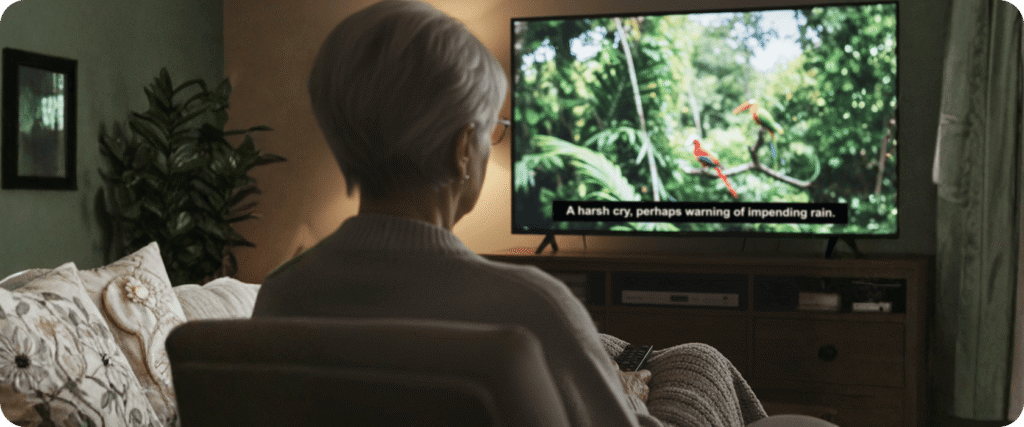
Closed captions for the hearing impaired appear on screens to show you what’s being said. The term “closed” means you can turn the captions on or off, unlike open captions which are always visible to everyone.
Television and streaming
All TVs sold in the United States with screens 13 inches or larger must have built-in caption decoders. You can turn captions on using your TV’s remote control. Netflix, Hulu, Amazon Prime, and other streaming platforms offer closed captions for the hearing impaired for most of their content. You can usually turn them on through the settings menu.
Movies and entertainment
Many movie theaters offer devices that display captions for people with hearing loss. Ask the theater staff about caption glasses or other assistive devices they provide.
Video calls and meetings
Platforms like Zoom and Google Meet include automatic captioning features. These closed captions for the hearing impaired make it possible to read what people are saying during video meetings or virtual family gatherings.
Portable and mobile options
Some options provide captions for live events like meetings, lectures, or performances. These might connect to an app on your smartphone or display captions on a small screen you can hold or place on a table. Several apps turn your smartphone into a closed caption device for hearing impaired individuals. These apps use speech recognition to create captions of conversations happening around you. Smart glasses with caption displays can even caption face-to-face conversations.
How captions help
Captions do more than just repeat the spoken words. They also describe important sounds, like [doorbell ringing] or [phone ringing], so you know what’s happening. This helps you follow the story or conversation more completely.
Choosing the Right Hearing Assistance Devices
With so many options available, how do you know which hearing assistance devices are right for you? Here are some questions to consider:
Where do you need the most help?
Think about the situations where you struggle to hear. Is it mainly on the phone? While watching TV? In group conversations? Different devices work better in different situations.
If phone conversations are your biggest challenge, a caption phone might be your best choice. If you have trouble hearing the TV, a personal listening system might help most.
What’s your budget?
Some hearing assistance devices are available at no cost through programs for people with hearing loss. The ClearCaptions Phone, for example, is available at no cost to qualified individuals. If you have hearing loss that requires captions to use the phone, live in the United States or one of its territories, have internet, and can communicate in English, you may qualify for ClearCaptions at absolutely no cost. Other devices may require a purchase, but prices vary widely.
How comfortable are you with technology?
Most modern hearing assistance devices are designed to be easy to use, but some are simpler than others. Caption phones work much like regular phones, while smartphone apps might require more tech comfort.
Do you already use hearing aids?
If you wear hearing aids, some hearing assistance devices can work together with them. For example, many modern hearing aids can connect wirelessly to caption phones, TVs, and other devices.
Getting Captioning and Hearing Assistance Devices
Fortunately, many captioning and hearing assistance devices are available through programs specifically designed to help people with hearing loss. Understanding your options for obtaining these hearing assistance devices can help you access the support you need.
How to get devices
Caption phone services are typically available at no cost to qualified individuals. ClearCaptions, for example, provides phones and services funded through federally managed programs. If you are eligible, you’ll receive a free caption phone with no-cost captioning service, free in-home phone setup, continual training and support that’s always free, and a lifetime warranty.
Many states have programs that provide assistive devices to residents with hearing loss at no cost or reduced prices. Some health insurance plans cover certain hearing assistance devices. Veterans may be eligible for hearing assistance devices through the Department of Veterans Affairs.
Using devices at home and in public
Once you have your devices, using them becomes part of your daily routine. These hearing assistance devices are designed to blend seamlessly into your life.
Place your caption phone where you make calls most often in a spot with good lighting. For TV listening systems, position the transmitter near your television and keep your headset charged. Set up alerting devices throughout your home so you’ll notice alerts no matter which room you’re in.
Many public spaces now provide hearing assistance devices. Places of worship often have hearing loop systems or FM receivers. Movie theaters and performance venues offer assistive listening devices and caption displays. Schools, government facilities, and courtrooms typically provide communication access, including captioning services and assistive listening systems.
The Benefits of Captioning and Hearing Assistance Devices Beyond Hearing
Using captioning and hearing assistance devices offers benefits that go beyond just hearing better.
Reduced stress and fatigue
It can become exhausting constantly straining to hear. Having reliable ways to access spoken information reduces the mental effort required to follow conversations. You’ll feel less tired at the end of the day.
Improved relationships
Clear communication strengthens relationships. When you can follow conversations easily, you’re more likely to participate, share your thoughts, and stay connected with family and friends.
Increased independence
Being able to make phone calls independently, watch TV without help, and respond to doorbells and alarms on your own helps you maintain your independence and confidence.
Better safety
Alerting devices help ensure you’re aware of important sounds like smoke alarms, emergency alerts, or someone at your door. This contributes to your safety at home.
Taking the Next Step
If you’re ready to explore captioning and hearing assistance devices, start by thinking about your biggest challenges. Do you struggle most with phone conversations? Is the TV hard to hear? Do you miss doorbells or alarms?
Once you identify your main needs, you can focus on the hearing assistance devices that will help most. Many people start with one closed caption device for hearing impaired use, like a caption phone, and add other tools over time as they discover what works best for their lifestyle.
Remember that using captioning and hearing assistance devices doesn’t mean giving in to hearing loss. It means taking control and making sure hearing loss doesn’t control your life. These tools help you stay connected, informed, and independent.
Frequently Asked Questions
Do I need a prescription to get captioning and hearing assistance devices?
For most devices, you don’t need a prescription. Caption phones require certification that you have hearing loss that makes captions necessary, but this isn’t the same as a prescription. Some devices can be purchased directly without any paperwork.
Will using a closed caption device for hearing impaired make my hearing worse?
No. Using closed captions for the hearing impaired or other hearing assistance devices will not damage your hearing or make it worse. These captioning and hearing assistance devices simply help you access information in ways that work better for you.
Can I use hearing assistance devices if I don’t have hearing aids?
Yes. Most hearing assistance devices work perfectly well on their own. You don’t need hearing aids to use caption phones, TV listening systems, or alerting devices. If you do have hearing aids, many devices can work together with them.
How quickly can I get a caption phone?
Most caption phone providers can deliver a phone within a few days of receiving your completed application and certification. The exact timeline depends on shipping and setup requirements. ClearCaptions works to get phones to qualified individuals as quickly as possible.
Do hearing assistance devices work in all environments?
Different devices work better in different settings. FM systems excel in noisy environments. TV listening systems are designed for home use. Alerting devices work best in familiar spaces where you can position them strategically. Most people find they need different devices for different situations.