What Caregivers Should Know About Caption Phones
Key Takeaways
- A caption phone displays written captions of phone conversations so your loved one can read what callers say, right as they say it.
- Caption phones are available at no cost to qualified individuals through a federally managed program.
- Setup is simple. A ClearCaptions specialist will come directly to your loved one’s home and set up the phone for them.
- Caption phones and hearing aids work well together. One doesn’t replace the other.
- Caregivers can play an active role in helping a loved one get set up and feel confident using their new captioned phone.
If someone you love is struggling to hear phone conversations, you’ve probably watched them pull back from the people and activities that matter most to them. Phone calls with grandchildren go unanswered. Calls to the doctor’s office feel like too much effort. The isolation that comes with hearing loss can be quiet and slow, but it’s real.
A captioned phone can change that. And as a caregiver, you’re often the one researching options, asking the right questions, and making things happen. This guide is for you.
What Is a Caption Phone and How Does It Work?
If you’ve been searching for answers to questions like “what is a caption phone” or “how does a caption phone work,” you’re in the right place.
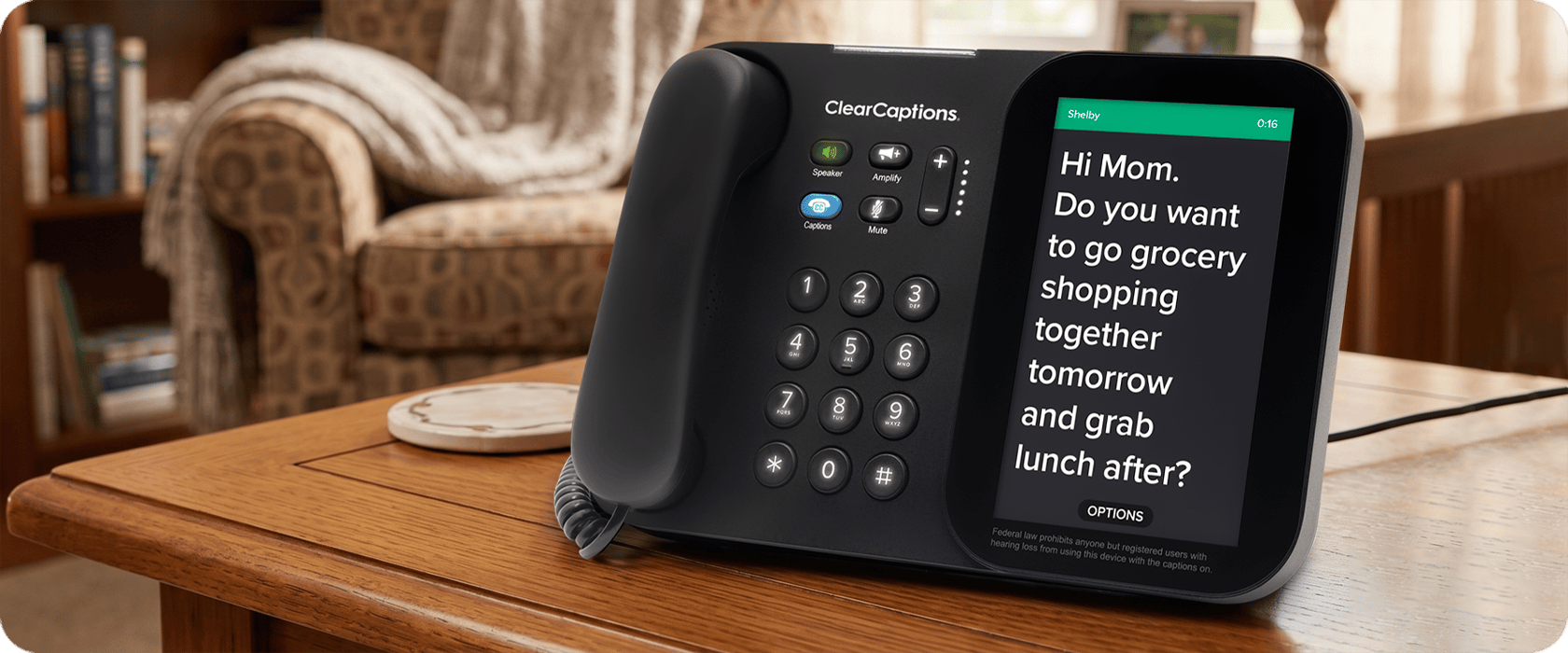
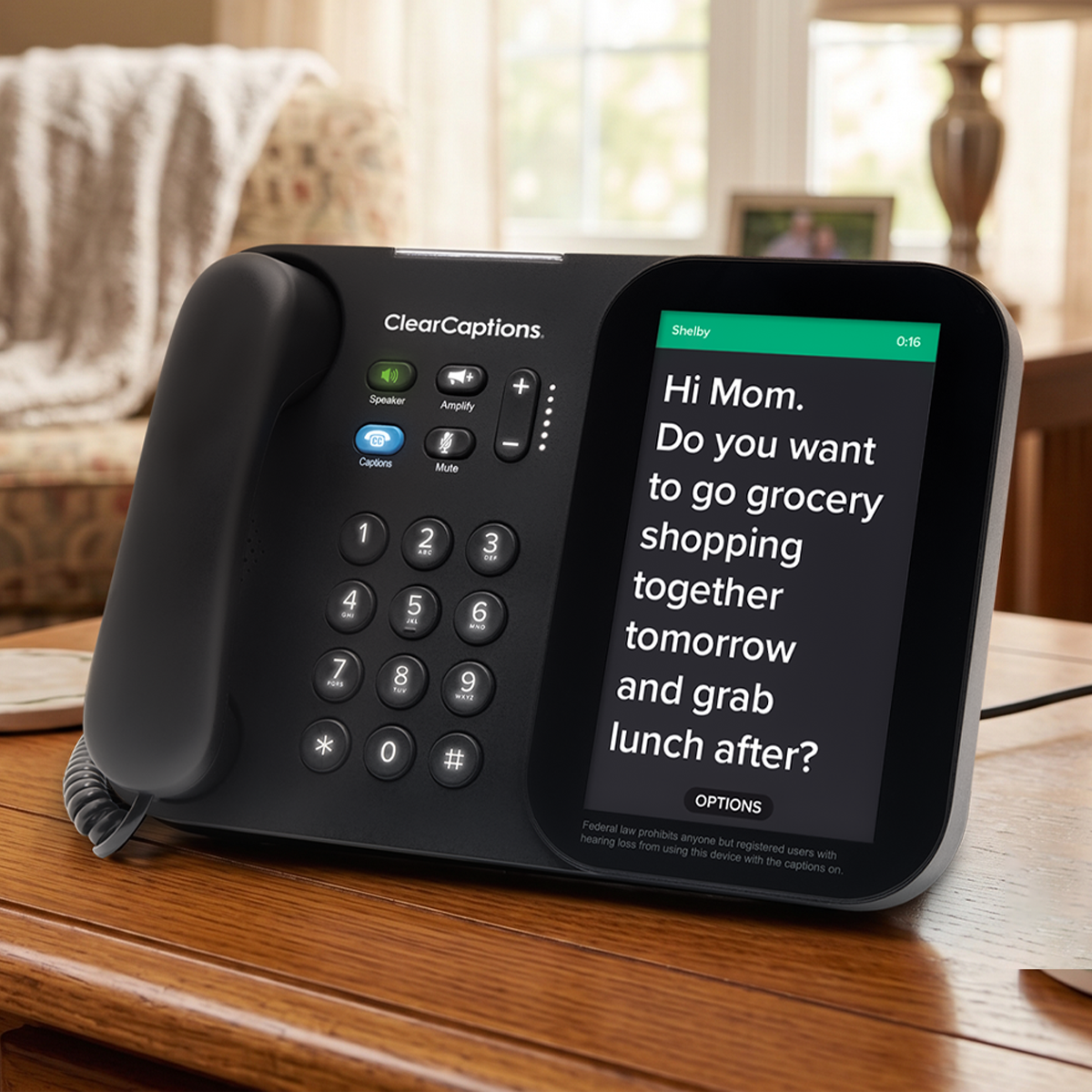
A caption phone is a home phone with a screen that displays written captions of what the other person on the call is saying. Your loved one can both hear and read the conversation at the same time, which makes it much easier to follow along, respond, and feel confident on the phone again.
Here’s how a caption phone works: when your loved one makes or receives a call, the audio is routed through a captioning service using a technology called Internet Protocol Captioned Telephone Service, or IP-CTS. That service converts the caller’s speech to text, and those captions appear on the phone’s screen during the call. Captions will appear shortly after a call starts and keep pace well enough that conversations feel natural.
The ClearCaptions Phone also stores captions from past calls, so your loved one can go back and review anything they may have missed.
Who Can Benefit From a Caption Phone?
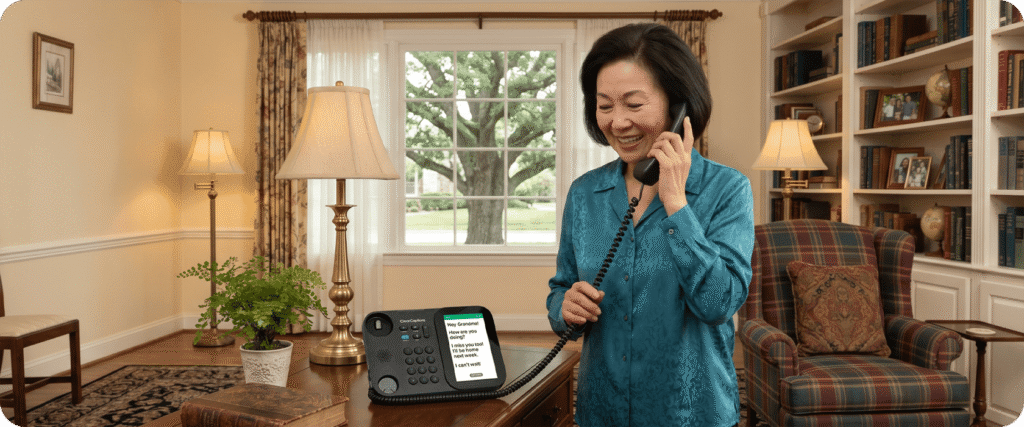
Anyone whose hearing loss makes it hard to follow a caption for phone calls is a good candidate. A phone with captions gives your loved one the ability to read what callers say as they say it, which takes the stress and guesswork out of every conversation. But as a caregiver, there are a few specific signs worth looking for.
Your loved one may benefit from a captioned phone if they:
- Turn the phone volume all the way up and still miss what callers are saying
- Frequently ask callers to repeat themselves
- Avoid making or answering calls because they’re too stressful or exhausting
- Rely on you or another family member to make calls on their behalf
- Struggle to follow phone conversations even with hearing aids in
- Feel anxious or frustrated after phone calls, or withdraw from them altogether
Hearing loss affects more than just sound. It can chip away at confidence, independence, and connection. When your loved one stops picking up the phone because they’re afraid of not understanding what’s being said, the ripple effects show up in other parts of their life, too.
Caption phones address this directly. By giving your loved one the ability to read conversations as they happen, the phone becomes usable again. Many customers report feeling more confident and more willing to initiate calls once they can see the words on a screen.
A captioned phone can also be especially valuable for people who live alone. Being able to handle calls from doctors, pharmacies, family members, and utility companies independently helps preserve the independence that matters so much to your loved one, and to you.
How Much Does a Caption Phone Cost?
This is often the first question caregivers ask, and the answer is a good one: caption phones are available at no cost to qualified individuals through a federally managed program established by Title IV of the Americans with Disabilities Act (ADA).
Setup, training, and ongoing support from ClearCaptions are also included at no cost. The only ongoing expense is a home internet connection, which many households already have.
Who Qualifies for a Caption Phone at No Cost?
To qualify, your loved one must:
- Have hearing loss that makes phone calls difficult
- Live in the United States or a U.S. territory
- Have access to home internet
- Be able to communicate in English
No medical certification or doctor’s note is required to qualify. The eligibility process is straightforward, and a ClearCaptions specialist will walk you through it. You can also verify your eligibility online in just a few minutes.
What Do You Need to Set Up a Caption Phone?
Very little. All your loved one needs is an active internet connection in their home. A ClearCaptions specialist will handle the rest.
In most cases, a no-cost in-home setup takes less than an hour. The specialist will connect the captioned phone, walk your loved one through the features, and make sure they feel comfortable before leaving. As a caregiver, you’re welcome to be there for the setup, which many families find helpful.
If you’re not nearby, over-the-phone and self-guided setup options are also available.
Caption Phone vs. Amplified Phone: What’s the Difference?
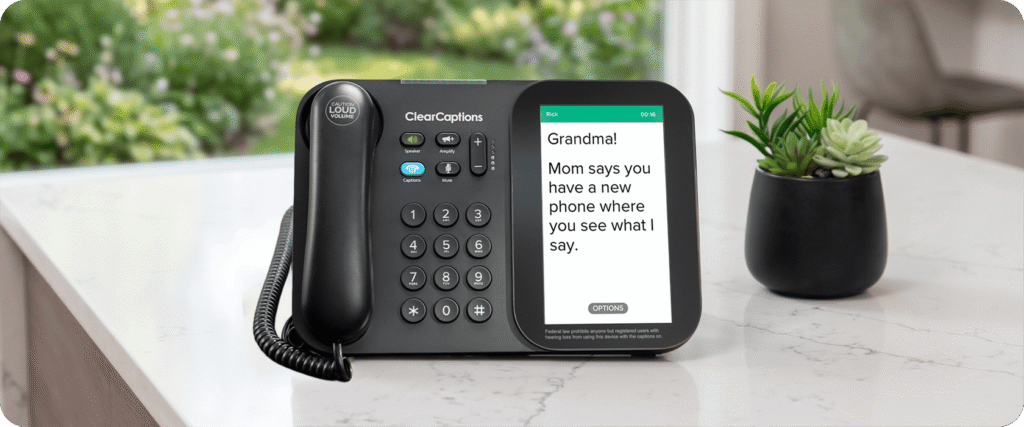
An amplified phone makes calls louder. That can help people with mild hearing difficulty, but it doesn’t solve the problem for someone who struggles to understand speech, not just volume.
A captioned phone addresses comprehension. It shows your loved one every word the caller says in text, right on the screen, giving them a caption for phone calls they can read in real time. Even when a captioned phone includes volume controls and amplification options, its core value is the visual display of conversation.
If your loved one has tried turning up the volume and it’s still not enough, a phone with captions is worth exploring.
Caption Phone vs. Hearing Aids: What’s the Difference?
Hearing aids and caption phones serve different purposes, and they work well together.
Hearing aids are worn throughout the day and help amplify sounds in everyday environments. They’re designed for general use: conversations in person, background sounds, TV, and more. A captioned phone is designed specifically for phone calls, giving your loved one a visual backup to what they’re hearing through the handset or speaker.
Many ClearCaptions customers wear hearing aids and still find their caption phone valuable. Following a phone conversation requires a different kind of listening than an in-person chat, and having the words on a screen gives your loved one an extra layer of confidence.
Key Features to Look for in a Caption Phone
When evaluating options, keep your loved one’s day-to-day needs in mind. A few features that make a real difference:
- Large, easy-to-read screen: Captions should be displayed in a size that’s comfortable without straining. Look for adjustable text size and color options.
- Speakerphone: Hands-free calling is easier for many older adults, especially those with limited dexterity.
- Simple controls: A clean, intuitive layout reduces the learning curve and builds confidence faster.
- Voicemail captioning: Captions for voicemail messages so your loved one can read what was said, not just listen.
- Call log with transcripts: A record of past captioned conversations helps your loved one review anything they missed.
- Contacts and favorites: Easy access to the people they call most often.
The ClearCaptions Phone comes with all these features and more at no cost to qualified individuals.
Common Concerns and Misconceptions
A few things caregivers often wonder about:
“Will they have to give up their current phone number?” We don’t currently have a way to move phone numbers from other providers over to our service. However, customers can still keep their existing landline number and connect it to their ClearCaptions Phone. If your loved one needs help setting this up, our customer support team is happy to guide them through it.
“Is the landline going away?” Phone lines are evolving, but the ability to make and receive calls isn’t going anywhere. Most caption phones use an internet connection rather than a traditional landline, so the transition is usually smooth.
“Will it be too complicated for them to learn?” The ClearCaptions Phone is designed with older adults in mind. Large buttons, a clear display, and straightforward controls make it approachable. And because a specialist provides in-person training, your loved one won’t be figuring it out alone.
How to Get a Caption Phone
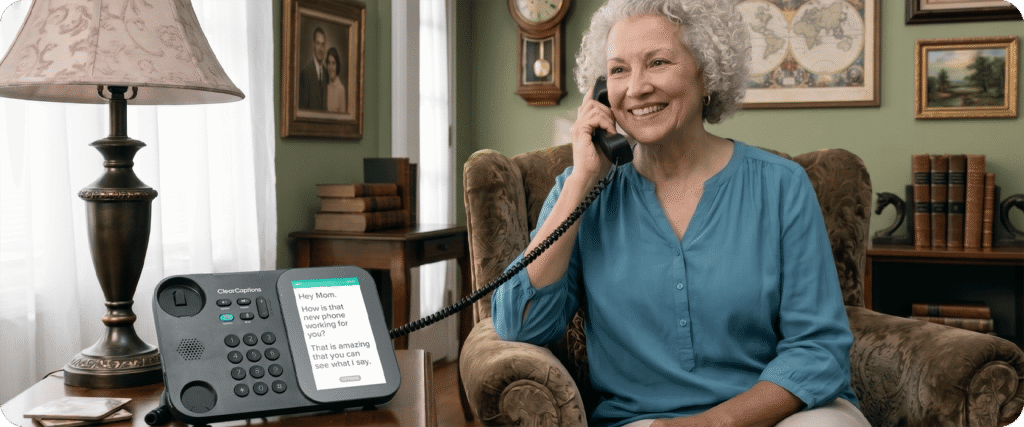
Getting started is simple. ClearCaptions offers a short eligibility form that takes just a few minutes to complete. Once eligibility is confirmed, your loved one will receive a phone with captions at no cost. A specialist will schedule an in-home setup and walk through all the features, making sure your loved one feels comfortable and ready to use it.
Ready to get started? Help your loved one verify their eligibility today.
Frequently Asked Questions
What is a caption phone, and who is it for?
A caption phone is a home phone that displays written captions of what callers say during a conversation. It’s designed for people with hearing loss that makes it difficult to follow phone calls, even with the volume turned up. Seniors, veterans with hearing loss, and others who struggle to hear on the phone are all good candidates.
How does a caption phone work?
When your loved one makes or receives a call on a captioned phone, the audio is routed through a captioning service that converts the caller’s speech to text. Those captions appear on the phone’s screen during the call. The process uses a technology called IP-CTS, or Internet Protocol Captioned Telephone Service, and works over a standard home internet connection.
Do caption phones require internet?
Most do, yes. Caption phones use an internet connection to deliver captions during calls. Some older models work with a traditional landline, but the majority of current caption phones, including the ClearCaptions Phone, require a reliable home internet connection.
Are caption phones available at no cost for seniors?
Yes. The ClearCaptions Phone is available at no cost to qualified individuals through a federally managed program. Eligibility is based on hearing loss that requires captions to use the phone, not age. Seniors make up the majority of those who qualify, but anyone who meets the criteria, including veterans with hearing loss and younger adults, can receive a captioned phone at no cost.
Can caption phones be used with hearing aids?
Yes, and many people use both. Caption phones and hearing aids complement each other well. The captions provide a visual backup to what your loved one hears through the handset, which can make phone conversations much easier to follow, even for hearing aid wearers who still struggle on calls.