What is Disability Pride Month? History, the Flag, and How to Celebrate

Key Takeaways
- Disability Pride Month is observed and celebrated every July, marking the anniversary of the Americans with Disabilities Act (ADA) being signed into law.
- More than 1 in 4 adults in the U.S. (over 70 million people) have at least one disability. Nearly 50% of adults over 65 live with a disability.
- Hearing loss affects 1 in 3 Americans aged 65–74 and nearly half of those over 75. By age 71, an estimated 65% of older adults have some degree of hearing loss.
- The Disability Pride Flag was designed by Ann Magil, a writer with cerebral palsy. Each color stripe on the flag represents a different group of people with disabilities.
- Clear communication is a civil right. Under the ADA, qualified people with hearing loss disabilities have access to captioned telephone services at no cost.
Every July, communities across the country celebrate Disability Pride Month with parades, events, and a shared sense of purpose and identity. For the more than 70 million Americans living with a disability, including more than 1 in 4 adults, this month is an opportunity to honor the full, rich reality of the disability experience.
This month is a reminder that these changes and challenges don’t have to be navigated alone. No matter your disability, know that you have people, communities, and tools available to help maintain your independence and celebrate your unique identity.
The History of Disability Pride Month
Disability Pride Month is observed every July to recognize and celebrate the day (July 26, 1990) the Americans with Disabilities Act (ADA) was signed into law by George H.W. Bush. The ADA is one of the most sweeping civil rights laws in American history. Before the law passed, people with disabilities had no federal legal protection from discrimination. This included protections for employment, public services, transportation, telecommunication, and more.
After the ADA was signed, Americans with disabilities were immediately guaranteed equal opportunities and protections, ensuring disabled individuals have the same rights as those without disabilities.
The first Disability Pride celebration took place in Boston in 1990, and Chicago hosted the first Disability Pride Parade in 2004. Today, July is recognized as Disability Pride Month, a time to honor the history, culture, and ongoing advocacy of the disability community.
The ADA is only 36 years old, and its protections are still being tested, updated, and defended. This is part of why this month is so important to acknowledge and celebrate.
Inclusion Makes the World Better
This year, Disability Pride Month carries a powerful new message and national theme: “The World Works Better With Us.” Selected by a national council led by disabled individuals, this theme for 2026 is a clear, proud statement about the power and value of inclusion.
When we respect and support disabled individuals across all generations and life experiences, we build stronger communities. Designing inclusive schools, workplaces, and public systems ultimately creates a better world for everyone.
Many of the tools and features we use today were originally fought for and designed by the disabled community. Consider these everyday examples:
- Curb cuts: Sidewalk ramps were first created so people using wheelchairs could enter buildings with stairs independently. Today, these ramps are essential for all types of people, including families pushing strollers, travelers pulling luggage, and seniors using walkers.
- Audiobooks and voice-to-text: What began as a tool for accessibility for individuals with visual or physical challenges is now used by millions of people to multitask or enjoy a story on their daily commute.
- Captioned telephone services: Established under the ADA as a fundamental right, captioned phone technology ensures individuals with hearing loss can communicate equally and freely. Today, similar technologies to the ones powering caption phones have helped pave the way for innovations like visual voicemail, captioned virtual meetings, and automated voice-to-text messaging.
Essential accommodations often evolve into innovations that make life easier for everyone. A world built for full inclusion, ultimately, works better.
All about the Disability Pride Flag
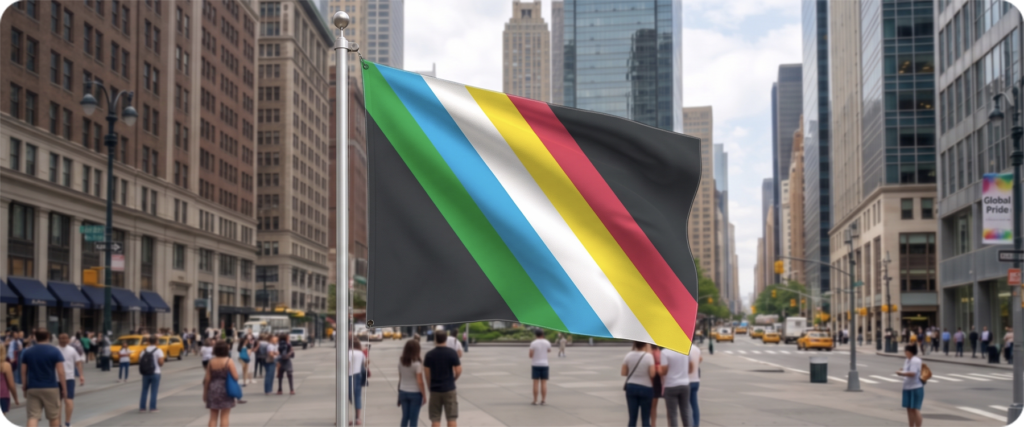
The Disability Pride Flag was created by Ann Magill, a writer with cerebral palsy. Magill was motivated to design a flag after attending an event honoring the 20th anniversary of the ADA in 2010. She felt the disabled community deserved a visible symbol of pride.
“I designed this flag to be for all Disabled people. I wanted something we could wave proudly in public. Something that says: We are here. We are united. And we are not invisible.”
Each stripe of the flag features a color representing different groups of disabled individuals.
- Red: Physical disabilities, including mobility impairments, chronic pain, and limb differences.
- Gold: Cognitive and intellectual disabilities, including autism, ADHD, Down syndrome, and learning disabilities.
- White: Non-apparent and undiagnosed disabilities, including many chronic illnesses.
- Blue: Psychiatric and mental health disabilities, including depression, anxiety, PTSD, and bipolar disorder.
- Green: Sensory disabilities, including deafness, hearing loss, blindness, and sensory processing disorders.
The charcoal background of the flag represents all the people who have passed away due to ableism, which is the discrimination or prejudice against people with disabilities. When printed and embossed, the flag and its stripes can be felt by people who are blind or visually impaired. Additionally, the flag’s muted colors reduce strain for those with light sensitivity, migraines, and visual processing disorders.
How to Celebrate Disability Pride Month
Disability Pride Month belongs to everyone. You don’t need to have a disability to show up for the community. Here are a few ways to participate:
- Attend a local event. Disability Pride parades and celebrations take place in cities across the country. Check with local disability organizations to see what is happening near you.
- Learn the history. Read about the disability rights movement and the people who fought for the ADA. Books like No Pity: People with Disabilities Forging a New Civil Rights Movement by Joseph P. Shapiro and Being Heumann: An Unrepentant Memoir of a Disability Rights Activist by Judith Heumann and Kristen Joiner are powerful starting points.
- Speak up. Push back on stereotypes and be an ally when you hear harmful language or see someone treated unfairly. Correct ableist language and educate family and friends on how best to be an advocate.
- Contact your elected representatives. Reach out to your local and federal representatives to express support for programs that help people with disabilities live independently.
- Listen to people with disabilities. The easiest way to be an ally to the disabled is by listening to what the community says it needs. Once you’ve listened, follow their lead.
Clear Communication Is a Fundamental Right
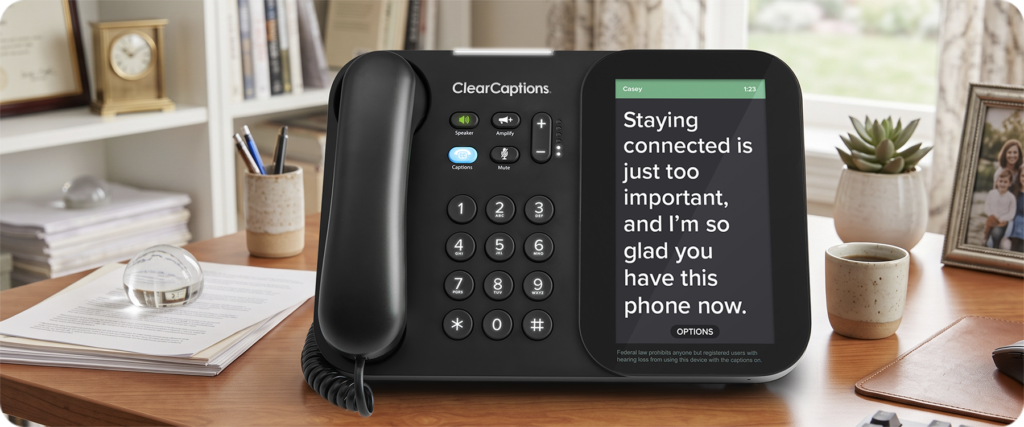
Hearing loss is one of the most common disabilities in our country today. Because it often develops gradually over time, it can go unaddressed for years and lead to social isolation. This makes honoring Disability Pride Month all the more important for those with hearing loss.
For people with hearing loss, the ability to communicate freely over the phone is a fundamental right, and the ADA helps make it a reality.
Title IV of the ADA requires the Federal Communications Commission (FCC) to provide people with hearing loss the same access to telephone services as those used by people without hearing loss. This represents the foundation for advancements in hearing accessibility, such as caption phones and captioned telephone service.
ClearCaptions was built on this foundation. We provide captioned phone service to people with hearing loss across all states and U.S. territories. Our service is available at no cost to qualified individuals through a federal program. When you call someone using the ClearCaptions Phone, the words your caller says appear as text on a large screen, allowing you to read every word, even if you can’t catch it all by ear.
If you or someone you love has hearing loss making phone calls difficult, ClearCaptions may be able to help. In addition to the no-cost service, ClearCaptions provides free in-home phone setup, guided training, continual support, and a lifetime warranty.
Call 866-996-1498 or visit our Sign Me Up page to get started today.
Frequently Asked Questions
What is Disability Pride Month?
Disability Pride Month is observed every July to celebrate the identity, history, and culture of the disability community and to honor the anniversary of the Americans with Disabilities Act.
Why is Disability Pride Month in July?
The ADA was signed on July 26, 1990. Disability Pride Month falls in July to mark that anniversary and recognize how far the disability rights movement has come since that landmark law was passed.
Who created the Disability Pride Flag?
The flag was designed by Ann Magill, a writer with cerebral palsy. She released the first version in 2019 and updated it in 2021 based on feedback from the disability community to make the design more accessible for people with visually triggered conditions.
Is hearing loss considered a disability?
Yes. Hearing loss is recognized as a disability under the ADA and is one of the most common disabilities in the United States. According to the National Institute on Deafness and Other Communication Disorders, about 22% of Americans aged 65–74 have disabling hearing loss, and that figure rises to 55% for adults 75 and older.
How does the ADA support people with hearing loss?
Title IV of the ADA required the FCC to make telephone services accessible for people with hearing loss. This led to the establishment of a special program that supports captioned telephone services. People with hearing loss can receive a captioned telephone at no cost to qualified individuals through this federally managed program.
How can I get a caption phone?
If you have hearing loss that makes phone calls difficult, you may qualify for a ClearCaptions Phone at no cost. Call 866-996-1498 or visit our Sign Me Up page to get started today.